
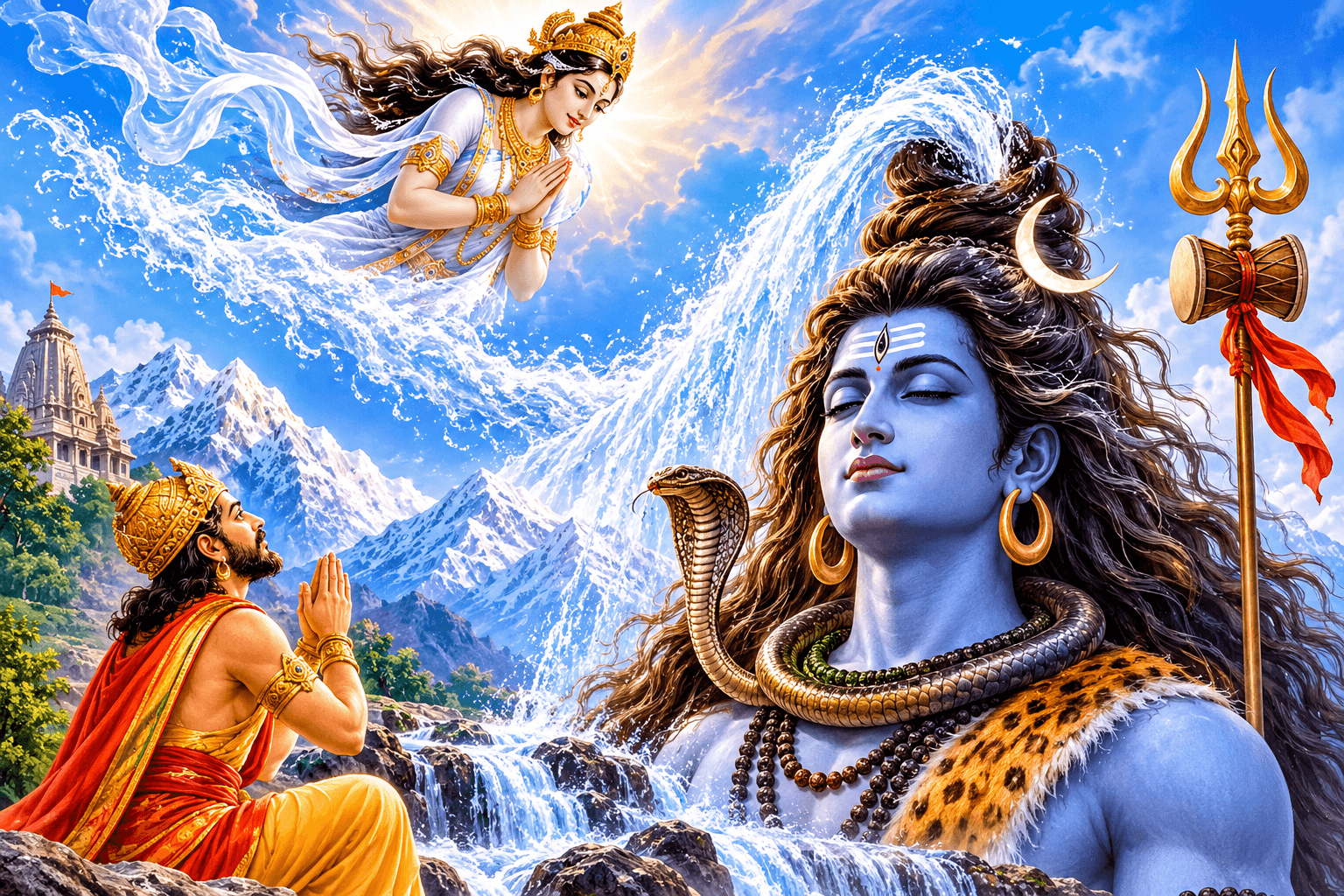
Lord Shiva and the holy river Ganga share a special connection in Hindu mythology. Lord Shiva is often depicted with the Ganga flowing from his matted hair (Jata). This beautiful image represents his divine power, compassion and responsibility towards protecting the world.
The story behind this connection is known as Ganga Avataran, which describes how the sacred river Ganga descended from heaven to Earth with the help of Lord Shiva.
The Story of King Bhagiratha
According to Hindu mythology, King Bhagiratha wanted to bring the heavenly river Ganga to Earth to provide salvation to the souls of his ancestors. His ancestors, the sons of King Sagara, had been reduced to ashes, and their souls needed the sacred waters of Ganga for liberation.
To fulfil this purpose, Bhagiratha performed intense meditation and penance for many years. Pleased with his devotion, Lord Brahma agreed to send Ganga to Earth.
However, there was one major problem. The powerful flow of Ganga was so strong that the Earth could not withstand her direct descent. Lord Brahma advised Bhagiratha to seek help from Lord Shiva.
Why Did Lord Shiva Hold Ganga in His Hair?
Bhagiratha prayed to Lord Shiva and requested him to control the powerful flow of Ganga.
Lord Shiva accepted his request and stood ready to receive the heavenly river. When Ganga descended from the heavens with tremendous force, Lord Shiva caught her in his thick, matted hair.
Her powerful current became trapped within Shiva’s Jata, preventing the Earth from being damaged.
Later, pleased with Bhagiratha’s continued devotion, Lord Shiva gently released Ganga from his hair, allowing her to flow towards the Earth.
This divine act made it possible for Ganga to reach the land and fulfil Bhagiratha’s wish.
How Ganga Became a Sacred River
After descending from Lord Shiva’s hair, Ganga followed King Bhagiratha towards the place where his ancestors’ ashes lay.
The sacred water touched their ashes and helped grant them liberation according to the mythological story.
Since then, the river Ganga has been considered one of the holiest rivers in Hinduism. Millions of devotees believe that bathing in its sacred waters helps purify the soul and brings spiritual blessings.
Why Is Lord Shiva Called Gangadhara?
Lord Shiva is also known as Gangadhara, which means the one who holds or carries the Ganga.
The Ganga flowing from his matted hair is one of the most recognised symbols of Lord Shiva. It represents his ability to control immense power and use it for the welfare of the world.
This is why devotees often worship Lord Shiva with Gangajal during prayers, especially during the holy month of Sawan.
Spiritual Significance of Shiva and Ganga
The connection between Lord Shiva and Ganga teaches several important spiritual lessons:
- Power and Control: Great power should always be handled with wisdom and responsibility.
- Devotion and Faith: King Bhagiratha’s determination shows the importance of dedication and faith.
- Purity and Peace: Ganga represents spiritual purification and divine blessings.
- Compassion: Lord Shiva’s decision to help Bhagiratha reflects his kindness and concern for the world.
- Humility: The story reminds us that even great strength should be guided by humility.
Conclusion
The mythological connection between Lord Shiva and the river Ganga is a beautiful story of devotion, sacrifice and divine protection. Lord Shiva controlled the powerful descent of Ganga and helped bring the sacred river to Earth.
Even today, Ganga holds a special place in the hearts of Shiva devotees. During Kanwar Yatra, millions of Kanwariyas collect holy Gangajal and carry it with deep faith to offer it to Lord Shiva.
The story of Ganga Avataran reminds devotees that true devotion, humility and divine blessings can overcome even the greatest challenges.