
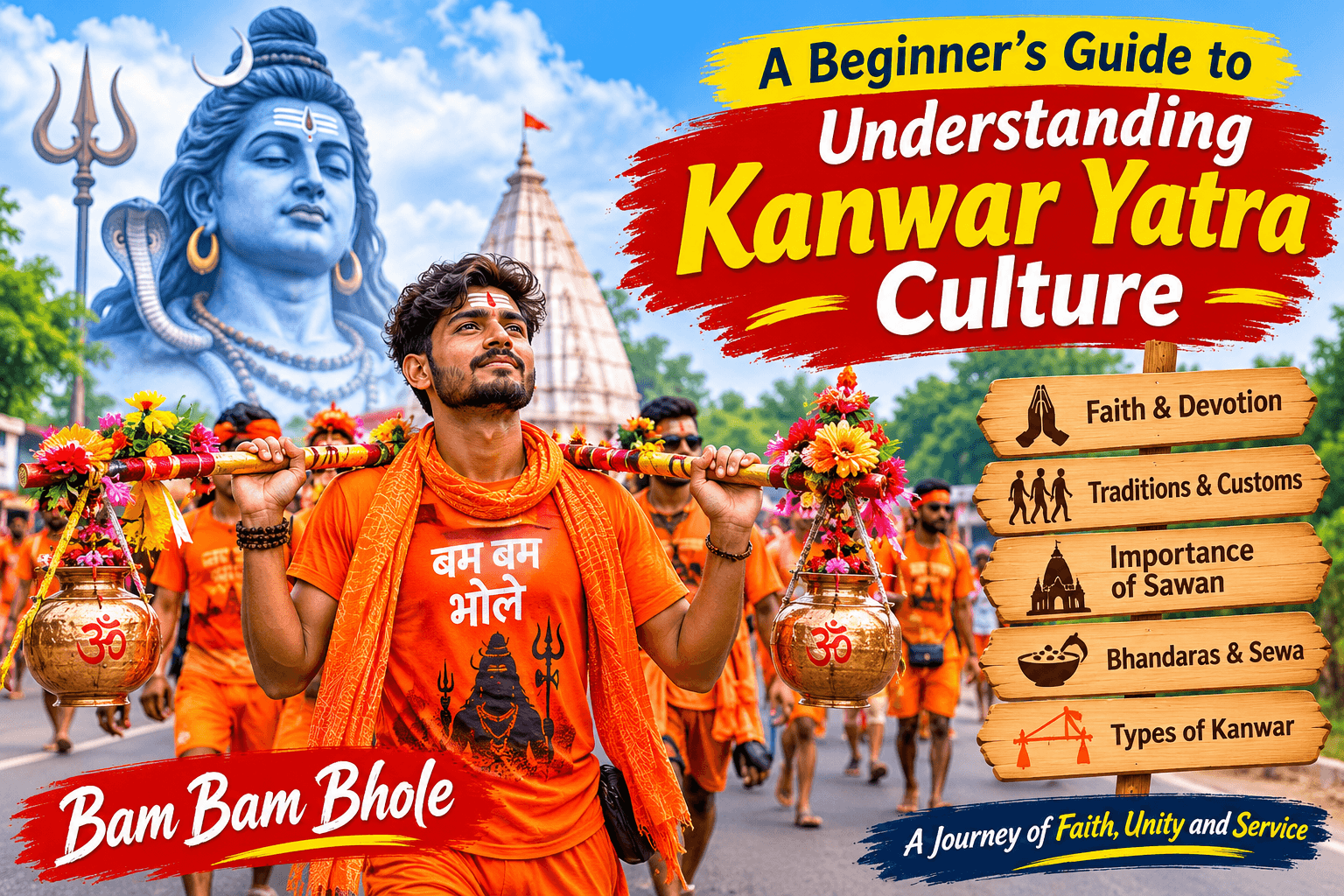
Kanwar Yatra is one of the most important religious pilgrimages dedicated to Lord Shiva in India. Every year, millions of devotees, known as Kanwariyas, participate in this sacred journey during the holy month of Sawan (Shravan). They travel to holy rivers such as the Ganga to collect sacred water and offer it to Lord Shiva at temples.
For beginners, understanding Kanwar Yatra culture is a wonderful way to learn about Indian traditions, spirituality, devotion, and community service.
1. What Is Kanwar Yatra?
Kanwar Yatra is a religious pilgrimage in which devotees collect holy water from sacred rivers and carry it in a decorated bamboo structure called a Kanwar. They then offer this water to Lord Shiva at temples, especially at Shivlingas.
2. Who Are Kanwariyas?
People who participate in Kanwar Yatra are called Kanwariyas. They usually wear saffron or orange clothing, walk barefoot, and chant devotional slogans such as “Bam Bam Bhole” and “Har Har Mahadev”.
Their journey represents faith, dedication, discipline, and devotion to Lord Shiva.
3. Importance of Sawan Month
Kanwar Yatra mainly takes place during the Hindu month of Sawan. This month is considered especially sacred for Lord Shiva. Devotees visit Shiva temples, observe fasts, perform prayers, and offer Ganga Jal to seek blessings.
4. Understanding the Kanwar
A Kanwar is a special carrying structure, traditionally made of bamboo, used to carry containers filled with holy water. It is often decorated with colourful ribbons, flowers, religious symbols, and pictures of Lord Shiva.
5. Common Traditions and Customs
Some important traditions followed during Kanwar Yatra include:
- Wearing saffron or orange clothes.
- Chanting “Bam Bam Bhole” and “Har Har Mahadev”.
- Maintaining cleanliness and devotional discipline.
- Avoiding placing the Kanwar directly on the ground.
- Following a vegetarian diet during the pilgrimage.
- Offering Ganga Jal to Lord Shiva.
6. The Importance of Bhandaras and Sewa
One of the most beautiful aspects of Kanwar Yatra culture is the spirit of service. Local communities and volunteers organise free food, drinking water, medical assistance, and resting places for Kanwariyas.
These activities reflect kindness, unity, and the importance of helping others.
7. Different Types of Kanwar Yatra
There are different ways devotees participate in Kanwar Yatra, including:
- General Kanwar: Devotees carry holy water at their own pace.
- Dak Kanwar: Devotees complete their journey continuously without stopping for rest.
- Dandi Kanwar: Devotees undertake the pilgrimage through repeated prostrations.
- Khadi Kanwar: The Kanwar is kept suspended or supported without being placed on the ground.
8. Why Is Kanwar Yatra Special?
Kanwar Yatra is not just a religious journey; it is a celebration of faith, brotherhood, discipline, and togetherness. People from different backgrounds come together with one common purpose: expressing their devotion to Lord Shiva.
Conclusion
Understanding Kanwar Yatra culture helps beginners appreciate the deep spiritual meaning behind this sacred pilgrimage. From carrying the Kanwar and chanting devotional slogans to participating in Bhandaras and helping fellow devotees, every tradition represents faith, dedication, and humanity.
Kanwar Yatra teaches us that devotion is not only about worship but also about kindness, unity, discipline, and serving others.