
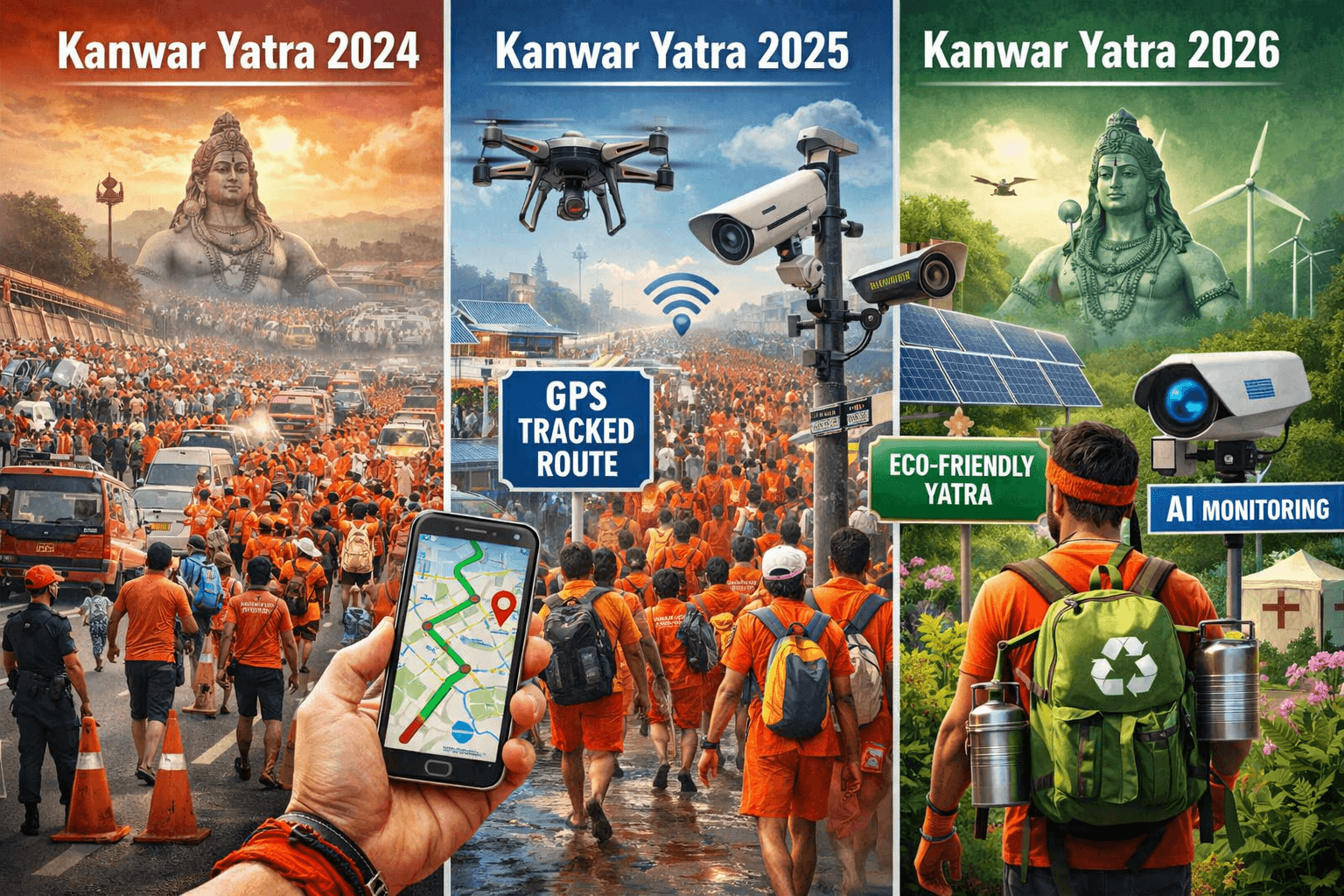
The sacred Kanwar Yatra is one of the largest annual pilgrimages in India, dedicated to Lord Shiva. Every year during the holy month of Shravan, millions of devotees (Kanwariyas) collect holy water from the Ganga River and offer it at Shiva temples.
While the spiritual essence remains the same, the Kanwar Yatra in 2024, 2025, and 2026 shows noticeable differences in scale, management, technology, and public participation.
1. Kanwar Yatra 2024 – Post-Pandemic Growth & Crowd Surge
The 2024 Yatra saw a massive increase in participation compared to previous years.
Key Highlights:
- Record-breaking number of Kanwariyas on highways
- Improved but still evolving crowd management systems
- Increased police deployment and temporary camps
- Traffic diversions in major states like Uttar Pradesh, Uttarakhand, and Delhi
Challenges:
- Heavy traffic congestion
- Limited digital monitoring in some areas
- Safety concerns due to overcrowding
2. Kanwar Yatra 2025 – Digital Transformation & Better Planning
In 2025, authorities focused heavily on technology and better coordination.
Key Improvements:
- Introduction of GPS tracking for Kanwar routes
- Use of drones for surveillance
- Dedicated Kanwar lanes on highways
- Real-time updates via apps and social media
Impact:
- Better crowd control
- Faster emergency response
- Improved safety for pilgrims
States like Haryana and Rajasthan also adopted stricter regulations and improved facilities.
3. Kanwar Yatra 2026 – Smart Yatra & Sustainability Focus
The 2026 Yatra is expected to be more organized, eco-friendly, and tech-driven.
Expected Features:
- Smart monitoring systems using AI-based surveillance
- Eco-friendly initiatives (plastic-free zones, waste management drives)
- Digital registration for Kanwariyas in some regions
- Enhanced medical and emergency services
Special Focus:
- Sustainability and cleanliness along routes
- Better infrastructure for long-distance pilgrims
- Collaboration between multiple state governments
Major Differences at a Glance
| Feature | 2024 | 2025 | 2026 (Expected) |
|---|---|---|---|
| Crowd Size | Very High | High | Very High |
| Technology Use | Limited | Moderate (GPS, drones) | Advanced (AI, smart systems) |
| Safety Measures | Basic improvements | Strong | Highly advanced |
| Environmental Focus | Minimal | Growing awareness | Major priority |
| Management | Reactive | Planned | Smart & predictive |
Conclusion
The Kanwar Yatra is evolving with time. From the crowd-heavy and traditional approach in 2024 to a more digitally managed 2025, and a smart, sustainable 2026, the journey reflects how faith and modern systems are coming together.
Despite these changes, the devotion towards Lord Shiva remains unchanged, making the Yatra a powerful symbol of faith, unity, and endurance.