
Introduction
The story of the Ocean of Amrit (Nectar of Immortality) and Samudra Manthan (Churning of the Ocean) is one of the most fascinating and symbolic events described in Hindu Puranas. This divine event holds deep spiritual significance, especially during the holy month of Shravan (Sawan), which is dedicated to Lord Shiva.
What is Samudra Manthan?
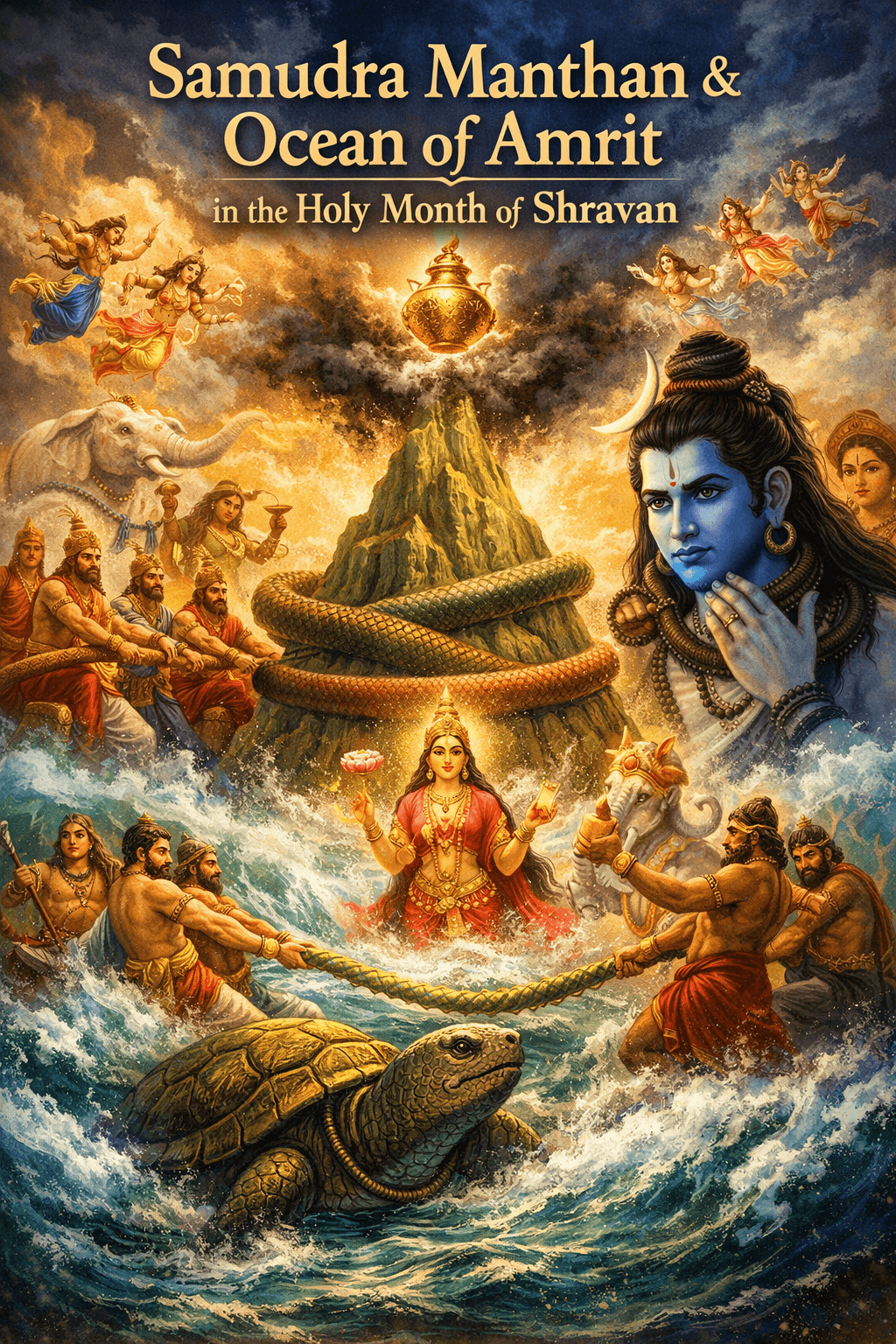
Samudra Manthan refers to the cosmic churning of the ocean by the Devas (gods) and Asuras (demons) in search of Amrit, the nectar of immortality.
According to the Puranas:
- The ocean (Kshira Sagar) was churned using Mount Mandara as the churning rod
- The serpent Vasuki was used as the rope
- Lord Vishnu supported the mountain by taking the form of Kurma (tortoise avatar)
This event symbolizes the eternal struggle between good and evil and the quest for divine truth.
Connection with the Month of Shravan
The month of Shravan is deeply connected to Samudra Manthan because during the churning, a deadly poison called Halahala emerged from the ocean.
To save the universe:
- Lord Shiva drank the poison
- Goddess Parvati held it in his throat to prevent it from spreading
- This turned Shiva’s throat blue, earning him the name Neelkanth
Devotees believe that Shravan is the time when Lord Shiva performed this महान act of sacrifice, which is why:
- Devotees offer water, milk, and Gangajal to Shiva
- Fasting and पूजा are performed every Monday (Shravan Somvar)
Treasures Obtained from Samudra Manthan
During the churning, many divine items and beings emerged, including:
- Goddess Lakshmi
- Kaustubha gem
- Airavata (Indra’s elephant)
- Kamadhenu (wish-fulfilling cow)
- Apsaras (celestial nymphs)
- Dhanvantari (with the pot of Amrit)
These treasures symbolize prosperity, health, and spiritual awakening.
Spiritual Meaning of Samudra Manthan
The story is not just mythological—it carries deep philosophical meaning:
- The ocean represents the human mind
- Devas and Asuras represent positive and negative thoughts
- Churning symbolizes self-discipline and inner struggle
- Amrit represents spiritual enlightenment
The emergence of poison first teaches that before achieving greatness, one must overcome negativity and hardships.
Importance During Shravan Month
During Shravan, devotees:
- Visit Shiva temples and perform Jal Abhishek
- Observe fasts (especially Mondays)
- Chant “Om Namah Shivaya”
- Participate in Kanwar Yatra
This month is considered highly auspicious for spiritual growth, devotion, and purification.
Conclusion
The story of Samudra Manthan and the Ocean of Amrit beautifully illustrates the balance of creation, destruction, and transformation. During the sacred month of Shravan, this story reminds devotees of Lord Shiva’s महान sacrifice and inspires them to overcome negativity and seek divine blessings.