
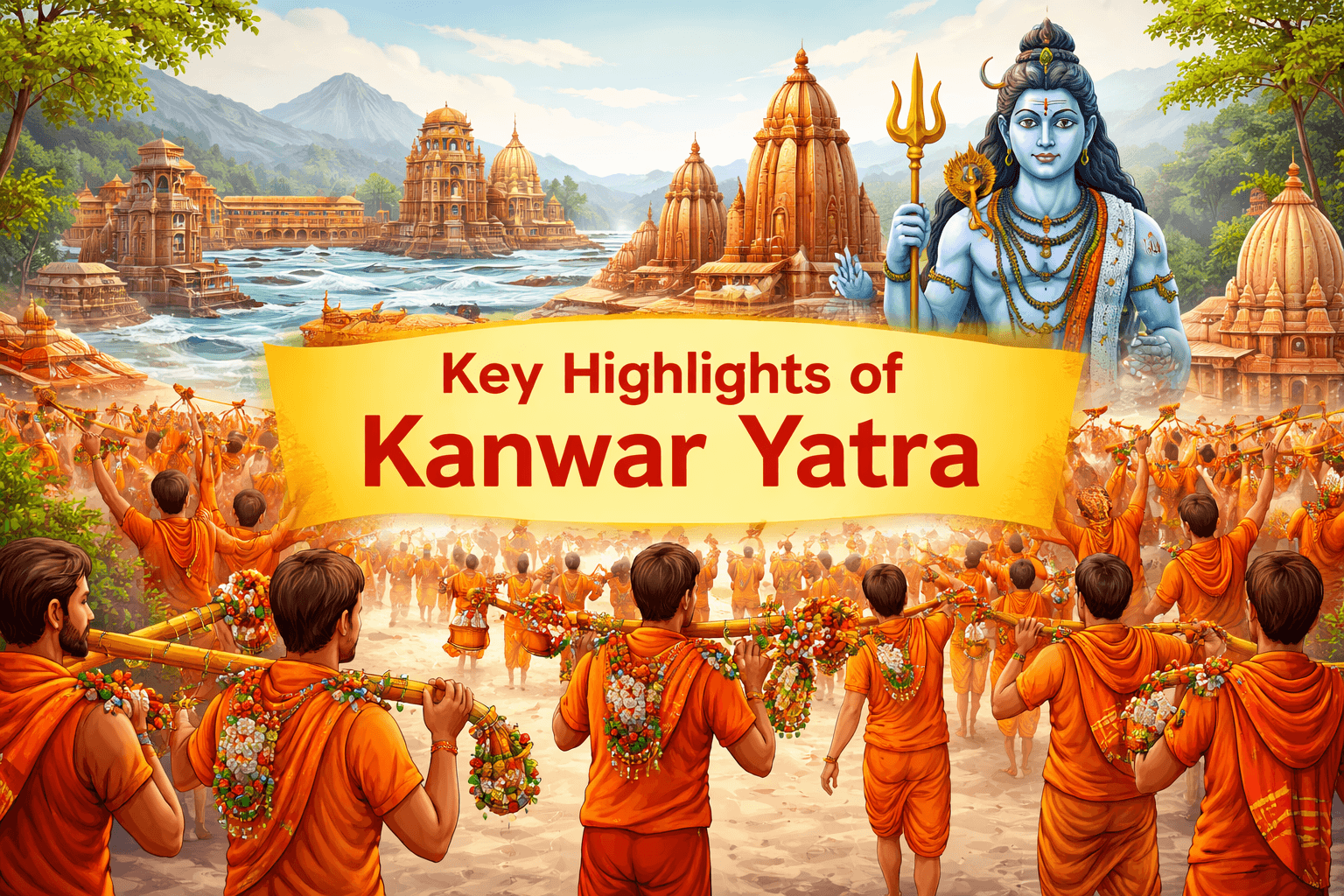
The Kanwar Yatra is one of the largest annual pilgrimages in India, dedicated to Lord Shiva. Millions of devotees, known as Kanwariyas, participate in this sacred journey during the holy month of Shravan. Here are the main highlights of this spiritual event:
1. Devotional Journey
Devotees walk long distances—sometimes hundreds of kilometers—to collect holy water from the River Ganga and offer it at Shiva temples. This journey reflects deep faith, discipline, and devotion.
2. Collection of Holy Water
Kanwariyas collect sacred water from places like Haridwar, Gaumukh, and Gangotri. The water is carried in decorated containers called Kanwars.
3. Offering to Lord Shiva
The collected Ganga water is offered on Shiva Lingas, especially on the auspicious day of Shravan Shivratri. This ritual is believed to bring blessings, peace, and fulfillment of wishes.
4. Strict Rituals and Rules
Participants follow strict rules such as walking barefoot, maintaining purity, avoiding non-vegetarian food, and practicing celibacy during the journey.
5. Types of Kanwar Yatra
There are different types of Kanwar Yatras:
- Dak Kanwar – Fast-paced journey without stopping
- Baithak Kanwar – Devotees rest at intervals
- Jhoola Kanwar – Kanwar is hung and not placed on the ground
6. Massive Participation
Millions of devotees from across India take part, making it one of the largest religious gatherings in the world.
7. Community Support
Local communities and organizations set up camps (Bhandaras) offering free food, water, and medical aid to pilgrims.
8. Festive Atmosphere
The entire route is filled with chants of “Bol Bam” and “Har Har Mahadev,” devotional songs, and a vibrant spiritual environment.
9. Government Arrangements
Authorities make special arrangements for safety, traffic control, healthcare, and sanitation to manage the huge crowd.
10. Cultural and Spiritual Significance
The Kanwar Yatra represents devotion, unity, and spiritual discipline. It strengthens cultural traditions and promotes a sense of community among devotees.