
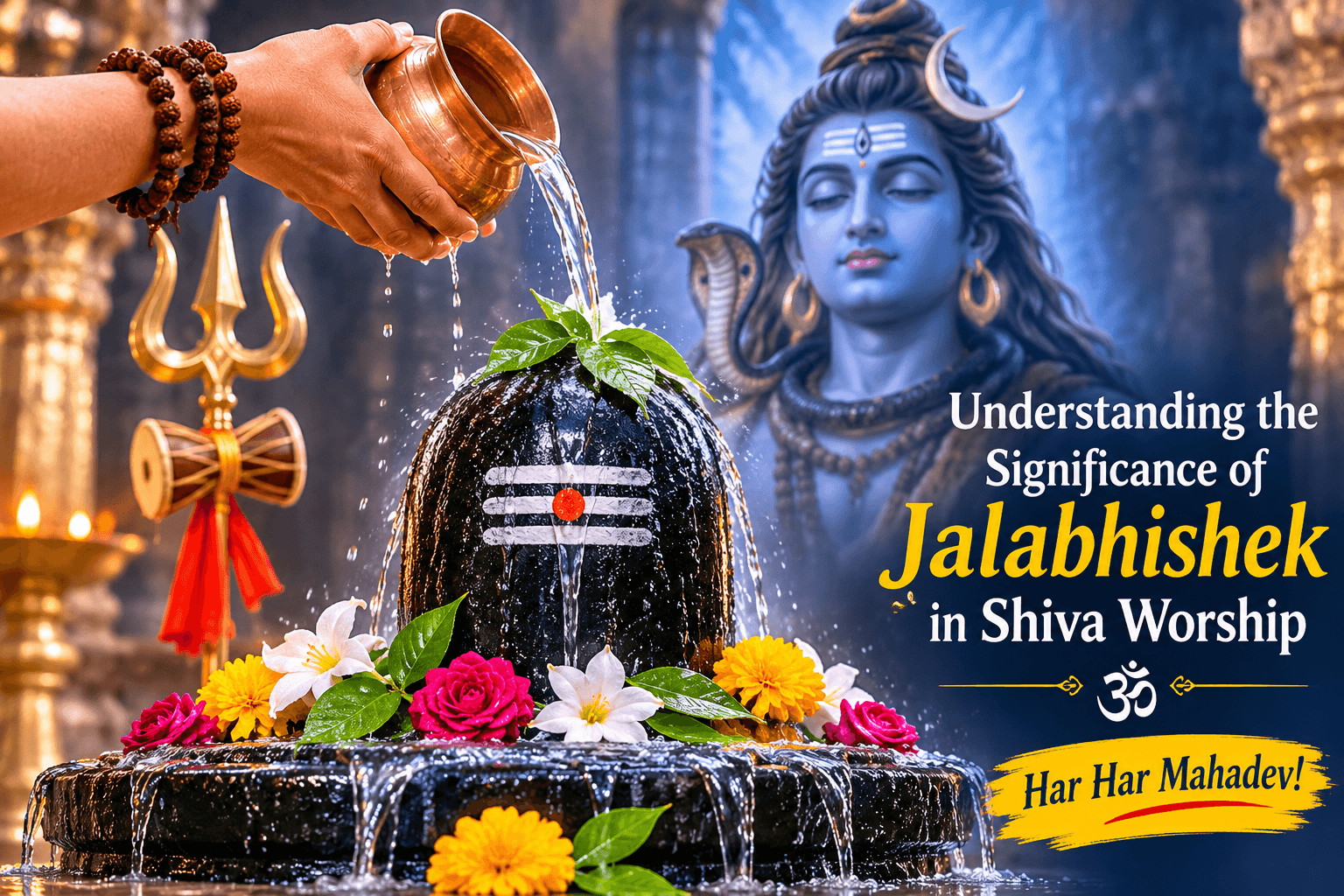
Jalabhishek is one of the most sacred rituals performed in the worship of Lord Shiva. The word Jalabhishek comes from two Sanskrit words: “Jal,” meaning water, and “Abhishek,” meaning the ceremonial bathing or offering of water to a deity. During this ritual, devotees pour holy water over the Shiva Lingam while chanting sacred mantras and praying for peace, happiness, and prosperity.
This ritual is especially important during the holy month of Shravan (Sawan), Mondays, Maha Shivratri, and other auspicious occasions dedicated to Lord Shiva.
1. Spiritual Meaning of Jalabhishek
Jalabhishek represents purity, devotion, and surrender to Lord Shiva. Water is considered a symbol of life and cleansing. By offering water to the Shiva Lingam, devotees express their gratitude and seek blessings for a peaceful and balanced life.
It also reminds devotees to remove negative thoughts, control their desires, and follow the path of truth and righteousness.
2. Why Do Devotees Offer Water to Lord Shiva?
According to Hindu traditions, offering water to Lord Shiva is associated with the story of Samudra Manthan. During the churning of the cosmic ocean, a deadly poison called Halahala emerged, threatening the entire universe.
To protect creation, Lord Shiva consumed the poison and held it in his throat, which turned blue. He became known as Neelkanth. Devotees offer water to Lord Shiva as a symbol of cooling and soothing his throat and expressing their gratitude for his sacrifice.
3. Importance of Jalabhishek During Shravan Month
The month of Shravan is considered extremely auspicious for Lord Shiva’s worship. During this period, millions of devotees visit Shiva temples and offer water collected from sacred rivers.
Kanwariyas undertake the holy Kanwar Yatra, carrying Ganga Jal from places such as Haridwar, Gaumukh, and other sacred locations to offer it to Lord Shiva.
This practice represents faith, dedication, discipline, and devotion.
4. Different Offerings Used in Jalabhishek
Apart from pure water, devotees traditionally offer several sacred items during Shiva worship.
- Ganga Jal: Represents spiritual purity and blessings.
- Milk: Symbolizes purity and devotion.
- Honey: Represents sweetness and positivity.
- Curd: Symbolizes prosperity and nourishment.
- Sugar: Represents happiness and sweetness in life.
- Bel Patra: Considered especially dear to Lord Shiva.
These offerings are made according to individual traditions and temple customs.
5. Benefits of Performing Jalabhishek
According to Hindu beliefs, performing Jalabhishek with sincere devotion is associated with several spiritual benefits:
- Brings peace and positivity into life.
- Helps devotees develop concentration and mental calmness.
- Strengthens faith and devotion towards Lord Shiva.
- Encourages humility, discipline, and gratitude.
- Creates a sense of spiritual connection and inner purification.
6. How to Perform Jalabhishek
Devotees can perform Jalabhishek at home or in a Shiva temple by following these simple steps:
- Wake up early and take a bath.
- Clean the worship area and Shiva Lingam.
- Offer clean water or Ganga Jal to the Shiva Lingam.
- Chant “Om Namah Shivaya” with devotion.
- Offer Bel Patra and flowers according to tradition.
- Pray to Lord Shiva for peace, happiness, and the well-being of your family.
Conclusion
Jalabhishek is much more than a religious ritual; it is a beautiful expression of faith, devotion, and gratitude towards Lord Shiva. It teaches devotees the importance of purity, simplicity, selflessness, and surrender.
Whether performed during Shravan, Maha Shivratri, or daily worship, offering water to Lord Shiva reminds devotees that true devotion comes from a pure heart and sincere intentions.
Har Har Mahadev!