
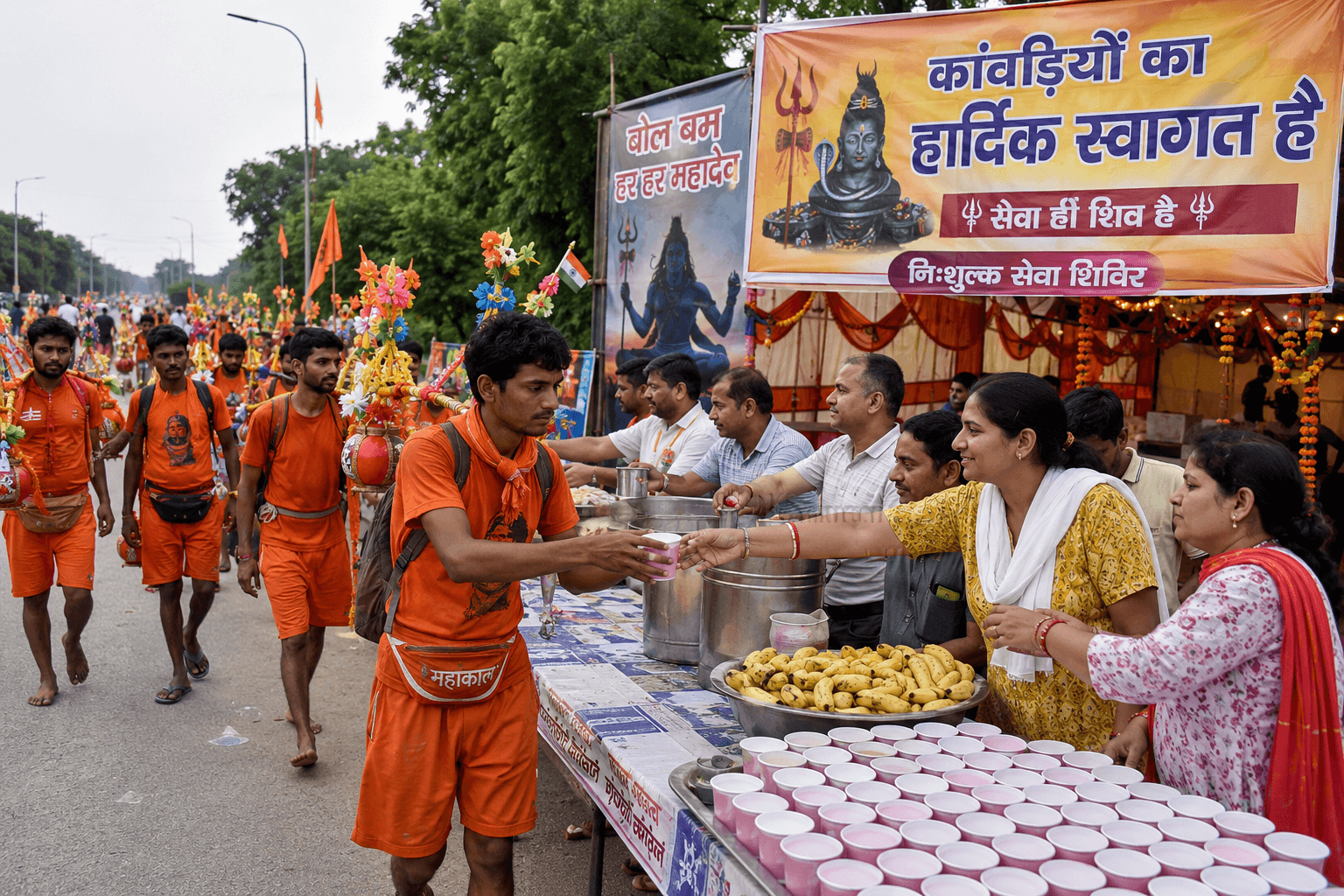
Every year during the holy month of Shravan, millions of devotees known as Kanwariyas undertake a sacred journey to collect holy water from the River Ganga and offer it to Lord Shiva. This spiritual pilgrimage is not just about devotion; it is also a beautiful example of how local communities come together to support and welcome pilgrims with warmth, respect, and service.
A Tradition Rooted in Faith and Service
The Kanwar Yatra is one of India’s largest annual religious pilgrimages. Devotees travel long distances—sometimes on foot for hundreds of kilometers—carrying decorated kanwars filled with sacred Ganga jal. Along their route, local residents, volunteers, and organizations actively participate in making the journey easier and safer.
For many communities, welcoming Kanwariyas is considered a form of seva (selfless service) and a way to earn spiritual blessings.
Setting Up Free Camps and Rest Stops
One of the most visible ways communities welcome Kanwariyas is by setting up temporary camps and rest shelters. These camps provide pilgrims with much-needed relief from long hours of walking.
Facilities often include:
- Drinking water
- Resting areas with shade
- Beds or mats for sleep
- Charging stations for phones
- Basic medical support
These camps help pilgrims recover physically before continuing their journey.
Food Distribution Through Bhandaras
Food service, or Bhandara, plays a major role during Kanwar Yatra. Local families, social groups, and charitable organizations organize free meal distributions for devotees.
Meals often include simple but nutritious food such as:
- Khichdi
- Puri-sabzi
- Fruits
- Tea and milk
- Sweet dishes like halwa
Serving food to Kanwariyas is seen as an act of devotion and hospitality.
Medical and Emergency Assistance
Because the pilgrimage can be physically demanding, many communities collaborate with healthcare workers and volunteers to provide medical assistance.
Emergency services commonly include:
- First aid centers
- Ambulance support
- Foot care for blisters and injuries
- Hydration stations
- Heatstroke prevention support
This support ensures the well-being of devotees throughout the journey.
Decorative Welcomes and Spiritual Atmosphere
In many towns and villages, roads are decorated with:
- Saffron flags
- Floral gates
- Welcome banners
- Devotional posters
Loudspeakers often play bhajans and chants of “Bol Bam” and “Har Har Mahadev,” creating an uplifting spiritual environment that energizes pilgrims.
Traffic Support and Public Cooperation
Managing millions of pilgrims requires strong coordination. Local communities often cooperate with authorities by helping with traffic management and crowd control.
Shopkeepers, residents, and volunteers assist by:
- Guiding routes
- Clearing walking paths
- Offering water during traffic stops
- Supporting elderly pilgrims
This collective effort helps maintain safety and order.
Strengthening Social Unity
The Kanwar Yatra also highlights India’s social harmony. People from different backgrounds, ages, and professions come together for a common purpose—serving devotees.
This spirit of unity strengthens community bonds and reminds everyone of the power of compassion and collective faith.
Conclusion
The annual welcome given to Kanwariyas reflects the true spirit of devotion, hospitality, and service. From free food and medical camps to emotional encouragement and spiritual support, local communities play a crucial role in making the Kanwar Yatra meaningful.
Their efforts transform the pilgrimage into more than a religious journey—it becomes a powerful celebration of faith, unity, and human kindness.