
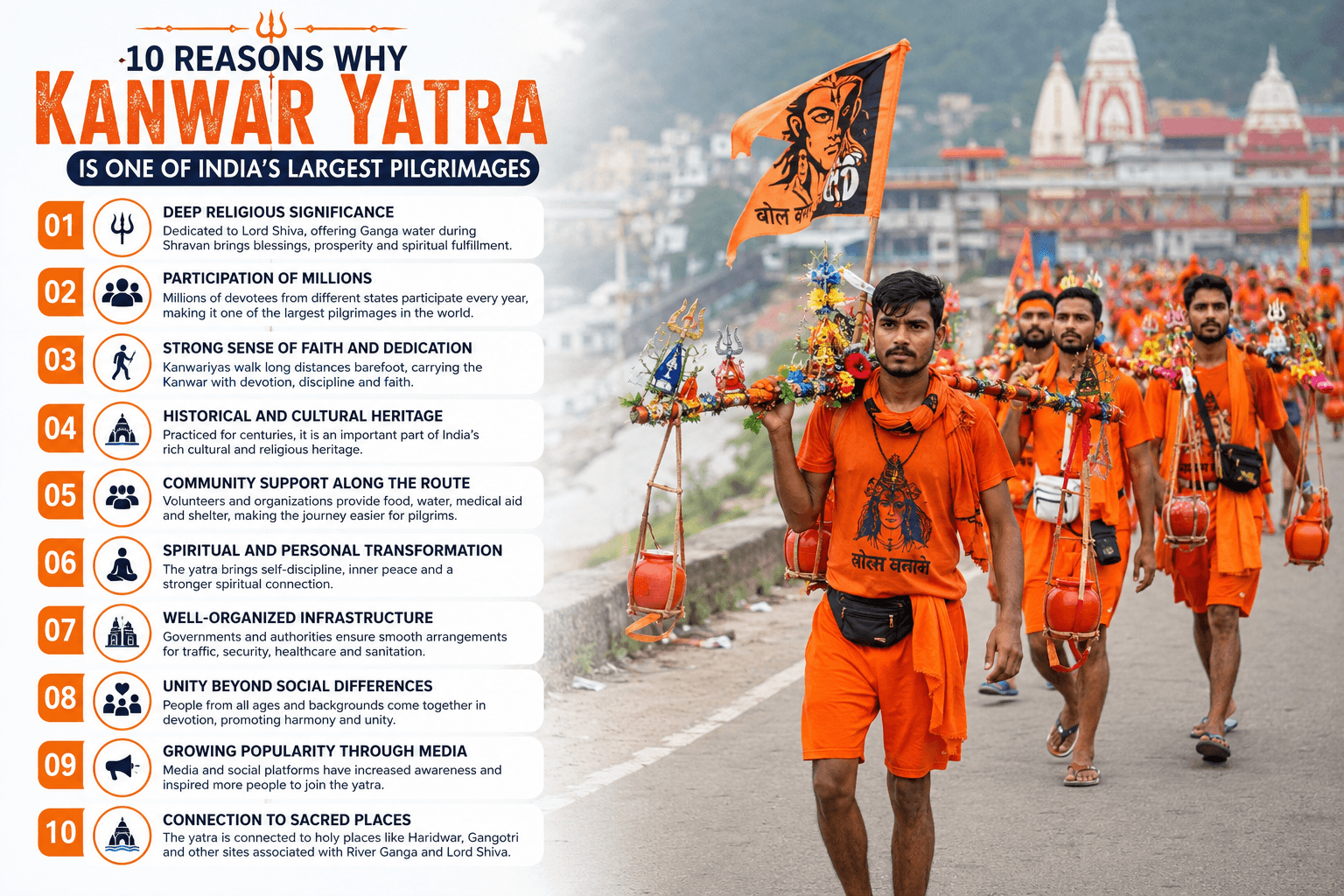
Every year, millions of devotees across India participate in the sacred Kanwar Yatra, making it one of the largest religious pilgrimages in the world. Dedicated to Lord Shiva, this spiritual journey is undertaken by devotees known as Kanwariyas, who travel long distances to collect holy water from the River Ganga and offer it at Shiva temples in their hometowns.
1. Deep Religious Significance
Kanwar Yatra is rooted in Hindu mythology and devotion to Lord Shiva. Devotees believe that offering Ganga water to Shiva during the holy month of Shravan brings blessings, prosperity, and spiritual fulfillment.
2. Participation of Millions of Devotees
One of the main reasons for the massive scale of Kanwar Yatra is the participation of millions of people from different states. Every year, devotees from Uttar Pradesh, Bihar, Haryana, Rajasthan, Delhi, Uttarakhand, Punjab, and many other regions join the pilgrimage.
3. Strong Sense of Faith and Dedication
Kanwariyas often walk hundreds of kilometers barefoot while carrying the sacred Kanwar. Their dedication, discipline, and faith inspire others and contribute to the growing popularity of the pilgrimage.
4. Historical and Cultural Heritage
Kanwar Yatra has been practiced for centuries and has become an important part of India’s cultural and religious heritage. The tradition continues to connect generations through shared faith and customs.
5. Community Support Along the Route
Local communities, social organizations, and volunteers set up food stalls, medical camps, resting shelters, and drinking water facilities for pilgrims. This support system makes the journey accessible and comfortable for millions.
6. Spiritual and Personal Transformation
Many devotees consider the pilgrimage a journey of self-discipline, devotion, and inner peace. The experience helps participants strengthen their spiritual connection and personal values.
7. Well-Organized Infrastructure
State governments and local authorities arrange traffic management, security, healthcare services, and sanitation facilities during the pilgrimage season, enabling large-scale participation.
8. Unity Beyond Social Differences
Kanwar Yatra brings together people from different backgrounds, ages, and communities. The shared devotion to Lord Shiva promotes social harmony and collective spiritual participation.
9. Growing Popularity Through Media
Television, social media, and digital platforms have increased awareness of the pilgrimage. As more people learn about its significance, participation continues to grow each year.
10. Connection to Sacred Places
The pilgrimage route includes holy destinations such as Haridwar, Gaumukh, Gangotri, and other sacred sites associated with the River Ganga and Lord Shiva. These spiritual locations attract devotees from across the country.
Conclusion
Kanwar Yatra stands as one of India’s largest pilgrimages because of its deep spiritual significance, rich cultural heritage, massive participation, and strong community support. It represents faith, devotion, discipline, and unity, making it a unique and inspiring religious journey for millions of devotees every year.