
Introduction
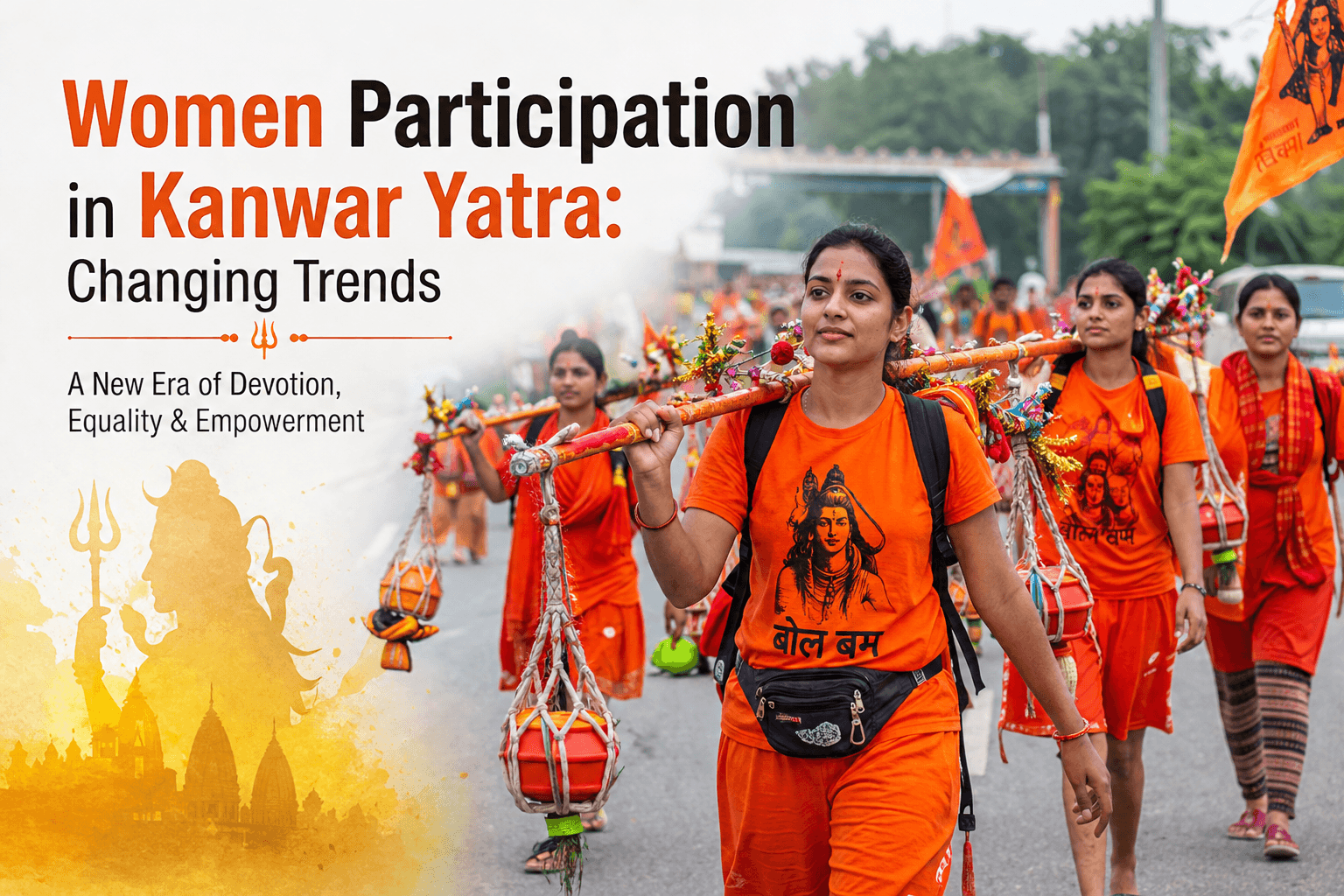
The sacred journey of Kanwar Yatra has long been associated with male devotees carrying holy water from the Ganga River to offer at Shiva temples. However, in recent years, a noticeable shift has emerged—more women are actively participating in this spiritual pilgrimage. This change reflects evolving social norms, growing empowerment, and the deep-rooted devotion of women towards Lord Shiva.
Historical Perspective
Traditionally, the Kanwar Yatra was considered physically demanding and culturally male-dominated. Women often played supportive roles—preparing essentials, praying from home, or assisting male family members. Safety concerns, long walking distances, and lack of facilities were major barriers limiting their participation.
Rise of Female Participation
In the past decade, the number of female Kanwariyas has significantly increased. Women from various age groups—young girls, working professionals, and even elderly devotees—are now seen walking alongside men, carrying Kanwars with equal devotion.
Key reasons behind this rise:
- Increased Awareness & Education: Women are more informed about their rights and opportunities to participate in religious practices.
- Improved Safety Measures: Government and local authorities have enhanced security arrangements, making the yatra safer.
- Supportive Families: Families are now encouraging women to take part in spiritual journeys.
- Spiritual Equality: A growing belief that devotion has no gender boundaries.
Changing Trends in Kanwar Yatra
- Women-Only Groups:
Many women now travel in groups, ensuring safety and companionship throughout the journey. - Modern Attire & Convenience:
While maintaining traditional values, women are opting for comfortable clothing and footwear suitable for long-distance walking. - Use of Technology:
Mobile apps, GPS tracking, and social media help women stay connected and safe during the pilgrimage. - Participation in Seva Activities:
Women are not only pilgrims but also actively involved in organizing camps, distributing food, and offering medical help.
Challenges Still Faced
Despite progress, some challenges remain:
- Limited sanitation and hygiene facilities
- Safety concerns in crowded areas
- Physical strain due to long walking distances
- Social stereotypes in certain regions
Government & Community Support
Authorities are taking steps to make the yatra more inclusive:
- Separate rest areas and sanitation facilities for women
- Increased police presence and CCTV surveillance
- Medical camps and emergency services along the routes
Community organizations are also playing a vital role by offering safe accommodations and support systems for female pilgrims.
Inspiring Stories
Many women have set inspiring examples by completing the Kanwar Yatra despite challenges. Their stories motivate others and highlight the strength, faith, and determination of women devotees.
Impact on Society
The increasing participation of women in Kanwar Yatra is more than just a religious trend—it symbolizes:
- Gender equality in spiritual practices
- Breaking traditional stereotypes
- Empowerment through faith and community involvement
Conclusion
The growing presence of women in Kanwar Yatra marks a significant cultural transformation. As more women step forward to express their devotion openly, the yatra is becoming more inclusive and diverse. This shift not only strengthens the spiritual fabric of society but also promotes equality and empowerment in meaningful ways.