
Introduction
The Kanwar Yatra is one of the largest annual religious pilgrimages in India, dedicated to Lord Shiva. Every year during the holy month of Shravan, millions of devotees (Kanwariyas) travel long distances to collect sacred water from the Ganga and offer it at Shiva temples.
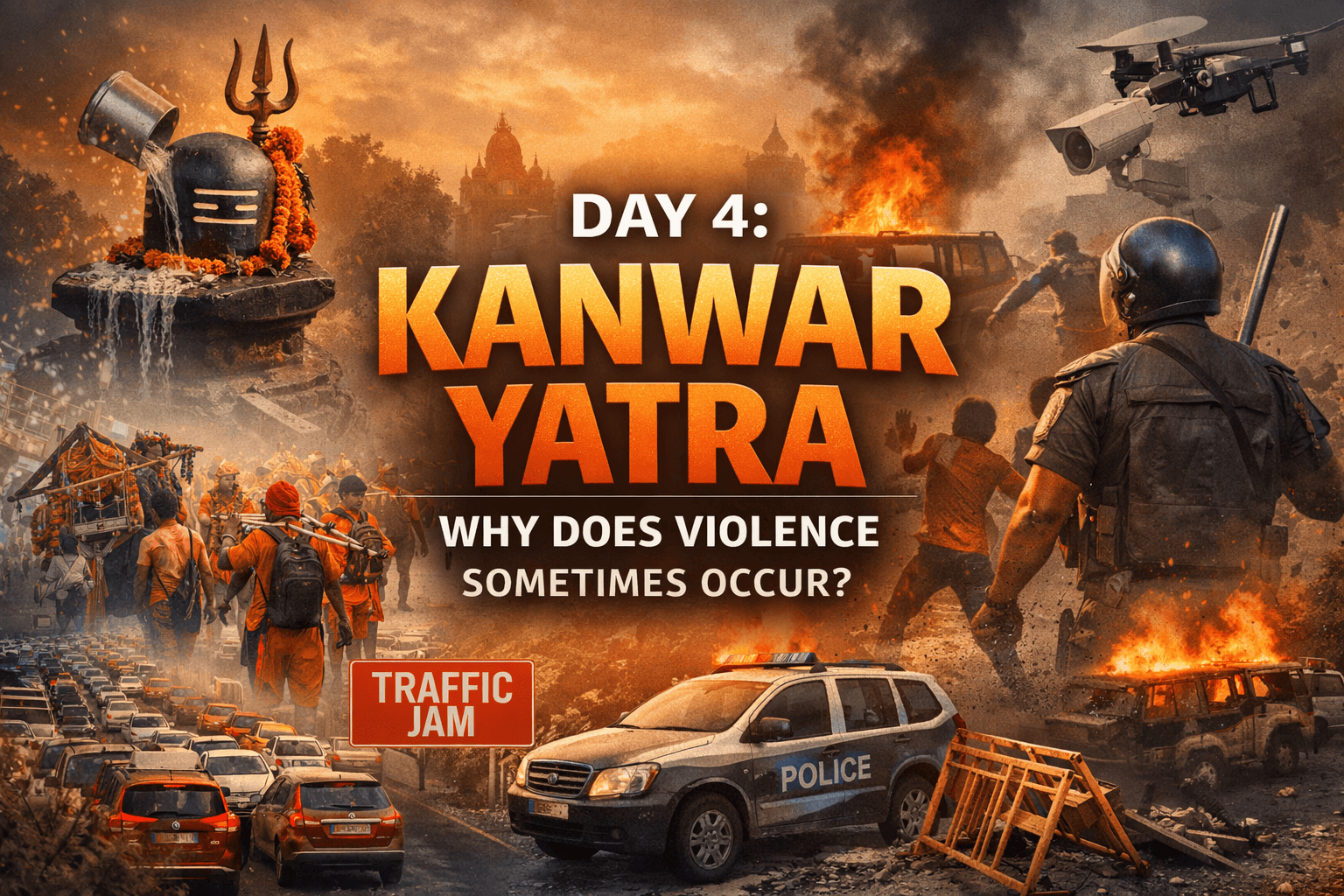
While the yatra is primarily a symbol of faith, devotion, and discipline, there have been instances reported in kanwar yatra news where conflicts or violence occur. Understanding the reasons behind these incidents is important to ensure a safer and more peaceful pilgrimage experience.
What Kind of Incidents Are Reported?
In recent years, some common issues reported during the yatra include:
- Road rage and traffic-related disputes
- Clashes between pilgrims and local residents
- Damage to public or private property
- Conflicts due to loud music or processions
- Mismanagement in crowded areas
These incidents are often highlighted in discussions around kanwar yatra violence and raise concerns about public safety.
Main Reasons Behind Kanwar Yatra Violence
1. Massive Crowd Pressure
The Kanwar Yatra involves millions of participants, often traveling on highways and city roads. Such huge gatherings can easily lead to:
- Overcrowding
- Panic situations
- Misunderstandings
Even a small trigger can escalate quickly in dense crowds, contributing to kanwar yatra problems.
2. Traffic Disruptions
Many roads are partially or fully reserved for Kanwariyas, causing:
- Traffic jams
- Delays for commuters
- Frustration among the general public
This sometimes leads to arguments or clashes between drivers and pilgrims.
3. Lack of Proper Management
In some areas, insufficient planning can result in:
- Poor crowd control
- Inadequate security
- Limited medical facilities
Without proper arrangements, small issues can turn into bigger conflicts.
4. Emotional and Physical Stress
Kanwariyas often walk long distances barefoot, fasting and carrying heavy loads. This can lead to:
- Fatigue
- Dehydration
- Emotional sensitivity
In such conditions, reactions can become more intense, increasing the risk of disputes.
5. Misbehavior by a Few Individuals
It’s important to note that the majority of pilgrims are peaceful. However, in large gatherings:
- A small number of miscreants
- Alcohol or substance misuse (in rare cases)
- Lack of discipline
can create disturbances that affect the entire event’s image.
Impact on Society
Incidents related to kanwar yatra violence can have wider consequences:
- Fear among local residents
- Damage to public infrastructure
- Negative perception of the pilgrimage
- Strain on law enforcement agencies
This makes improving kanwar yatra safety a priority for authorities and communities alike.
Solutions to Reduce Violence
1. Better Crowd Management
- Use of barricades and designated lanes
- Real-time monitoring with CCTV and drones
- Controlled entry in crowded zones
2. Improved Traffic Planning
- Alternative routes for general public
- Clear communication of road closures
- Dedicated Kanwar paths
3. Strong Police Presence
- Deployment of security forces at sensitive points
- Quick response teams for emergencies
4. Awareness Among Pilgrims
- Promoting discipline and peaceful behavior
- Encouraging respect for public property
- Spreading messages of harmony
5. Community Cooperation
- Support from local residents
- Volunteers and NGOs assisting pilgrims
- Coordination between authorities and organizers
Conclusion
The Kanwar Yatra is a powerful expression of devotion and faith. While incidents of kanwar yatra violence do occur, they are usually caused by a combination of crowd pressure, mismanagement, and isolated misconduct.
With better planning, awareness, and cooperation, these issues can be minimized. Ensuring kanwar yatra safety is not just the responsibility of authorities, but also of every participant and citizen.
A peaceful yatra reflects the true spirit of devotion to Lord Shiva — one rooted in patience, discipline, and harmony.