
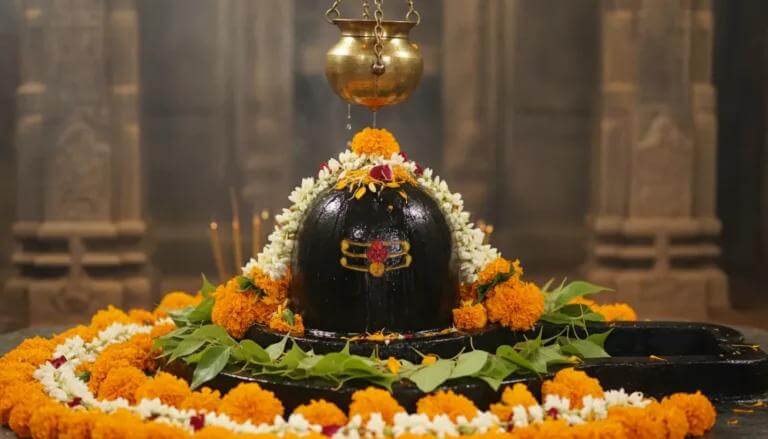
Sawan is one of the most sacred months for devotees of Lord Shiva. During this holy month, millions of devotees visit Shiva temples and offer prayers to seek the blessings of Mahadev. Worshipping Lord Shiva during Sawan is believed to bring peace, happiness, prosperity, and spiritual strength.
Devotees offer different sacred items to Lord Shiva as symbols of love, faith, and devotion. Each offering has its own religious and spiritual significance. Let’s explore some of the most popular offerings made to Lord Shiva during Sawan.
1. Bel Patra (Bael Leaves)
Bel Patra is considered one of the most important offerings to Lord Shiva. Traditionally, devotees offer three-leaf Bel Patra to the Shivling. These leaves symbolize purity, devotion, and the three fundamental aspects of existence. Offering fresh Bel Patra is believed to please Lord Shiva.
2. Milk
Milk is commonly used during Jalabhishek and Rudrabhishek. Devotees pour milk over the Shivling as a symbol of purity and devotion. It represents peace, simplicity, and spiritual cleansing.
3. Gangajal (Holy Ganga Water)
Gangajal holds special importance in Shiva worship. According to Hindu beliefs, Goddess Ganga resides in Lord Shiva’s matted hair. Offering Gangajal to the Shivling symbolizes purification and devotion.
4. Honey
Honey is another sacred offering made during Shiva worship. It represents sweetness, harmony, and positive energy. During traditional Abhishek rituals, honey is offered along with other sacred substances.
5. Dhatura and Aak Flowers
Dhatura fruits and Aak flowers are traditionally associated with Lord Shiva. Devotees offer these items as symbols of surrender and faith. They hold a special place in many regional Shiva worship traditions.
6. White Flowers
White flowers, especially white lotus and jasmine, are considered auspicious offerings to Lord Shiva. Their simple and pure appearance represents peace, devotion, and spiritual purity.
7. Fruits
Devotees offer seasonal fruits such as bananas, coconuts, apples, and other fresh fruits to Lord Shiva. These offerings represent gratitude and thankfulness for the blessings of nature.
8. Sandalwood (Chandan)
Sandalwood paste is applied to the Shivling during पूजा rituals. It symbolizes calmness, purity, and positivity. Its pleasant fragrance creates a peaceful atmosphere during worship.
9. Bhasma (Sacred Ash)
Bhasma holds deep spiritual significance in Lord Shiva’s worship. It represents the temporary nature of worldly life and reminds devotees that everything eventually returns to its original form.
10. Water (Jal)
Offering water to Lord Shiva is one of the simplest and most meaningful forms of worship. Devotees perform Jalabhishek with great faith, especially on Mondays during Sawan. It represents purity, surrender, and devotion.
Conclusion
Different offerings made to Lord Shiva during Sawan represent the deep faith and devotion of his followers. Whether it is Bel Patra, Gangajal, milk, flowers, fruits, or simple water, every offering becomes meaningful when performed with a pure heart.
The true essence of Shiva worship is not the quantity or value of offerings but the sincerity, love, and devotion behind them. As devotees celebrate Sawan, they seek the blessings of Mahadev and pray for happiness, peace, and spiritual growth.
Har Har Mahadev!