
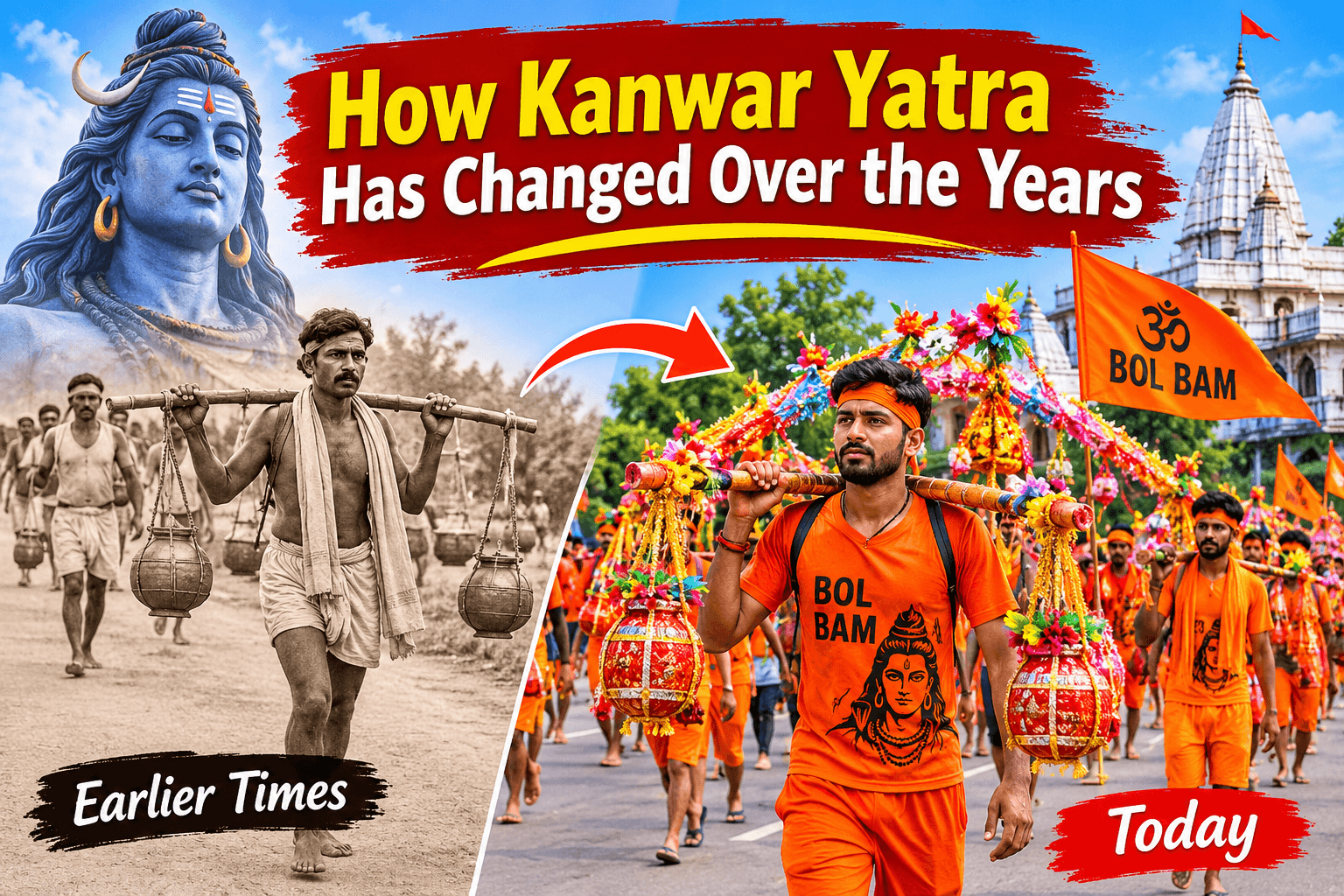
Kanwar Yatra is one of the most important religious journeys undertaken by devotees of Lord Shiva. Every year, millions of Kanwariyas travel to collect holy Ganga Jal and offer it to Lord Shiva at various temples. Over the years, this sacred pilgrimage has changed in many ways. While the faith and devotion of devotees remain the same, the way people participate in Kanwar Yatra has evolved with time.
1. Increase in the Number of Devotees
In earlier times, Kanwar Yatra was mainly attended by people from nearby villages and towns. Today, devotees from different states and cities participate in this religious journey. The increasing popularity of Kanwar Yatra has made it one of the largest annual religious gatherings in India.
2. Improvement in Transportation Facilities
Earlier, most Kanwariyas travelled long distances on foot with limited facilities. Today, many devotees still prefer walking as a symbol of devotion, while others use buses, trains and other transportation facilities to reach their starting points.
3. Better Facilities for Kanwariyas
In the past, devotees had limited access to food, drinking water and resting places during the journey. Nowadays, various organisations, volunteers and local communities arrange free food, medical assistance, resting camps and drinking water facilities.
4. Use of Modern Technology
Technology has made Kanwar Yatra more convenient. Mobile phones, GPS navigation, online information and social media help devotees find routes, stay connected with family members and receive important updates during the pilgrimage.
5. Changes in Kanwar Designs
Traditional Kanwars were generally simple and lightweight. Today, devotees carry Kanwars in different designs, sizes and decorative styles. Some Kanwars feature colourful decorations, lighting and creative structures, making the pilgrimage more visually attractive.
6. Better Safety and Security Arrangements
With the growing number of participants, safety has become an important part of Kanwar Yatra management. Police personnel, CCTV cameras, traffic arrangements, medical teams and emergency services help maintain order and support devotees throughout the journey.
7. Growing Participation of Young People
Earlier, many people considered Kanwar Yatra mainly a traditional religious activity. Today, a large number of young devotees actively participate in the pilgrimage. They also share their experiences, photographs and devotional messages through social media.
8. The Spirit of Devotion Remains Unchanged
Despite all the changes, the main purpose of Kanwar Yatra remains the same. Devotees continue to collect holy Ganga Jal, chant “Bol Bam” and “Har Har Mahadev” and offer their prayers to Lord Shiva with faith and dedication.
Conclusion
Kanwar Yatra has transformed significantly over the years in terms of facilities, transportation, technology, safety and participation. However, its spiritual importance and religious traditions continue to remain strong. The journey beautifully connects generations of Shiva devotees through faith, unity, discipline and devotion.