
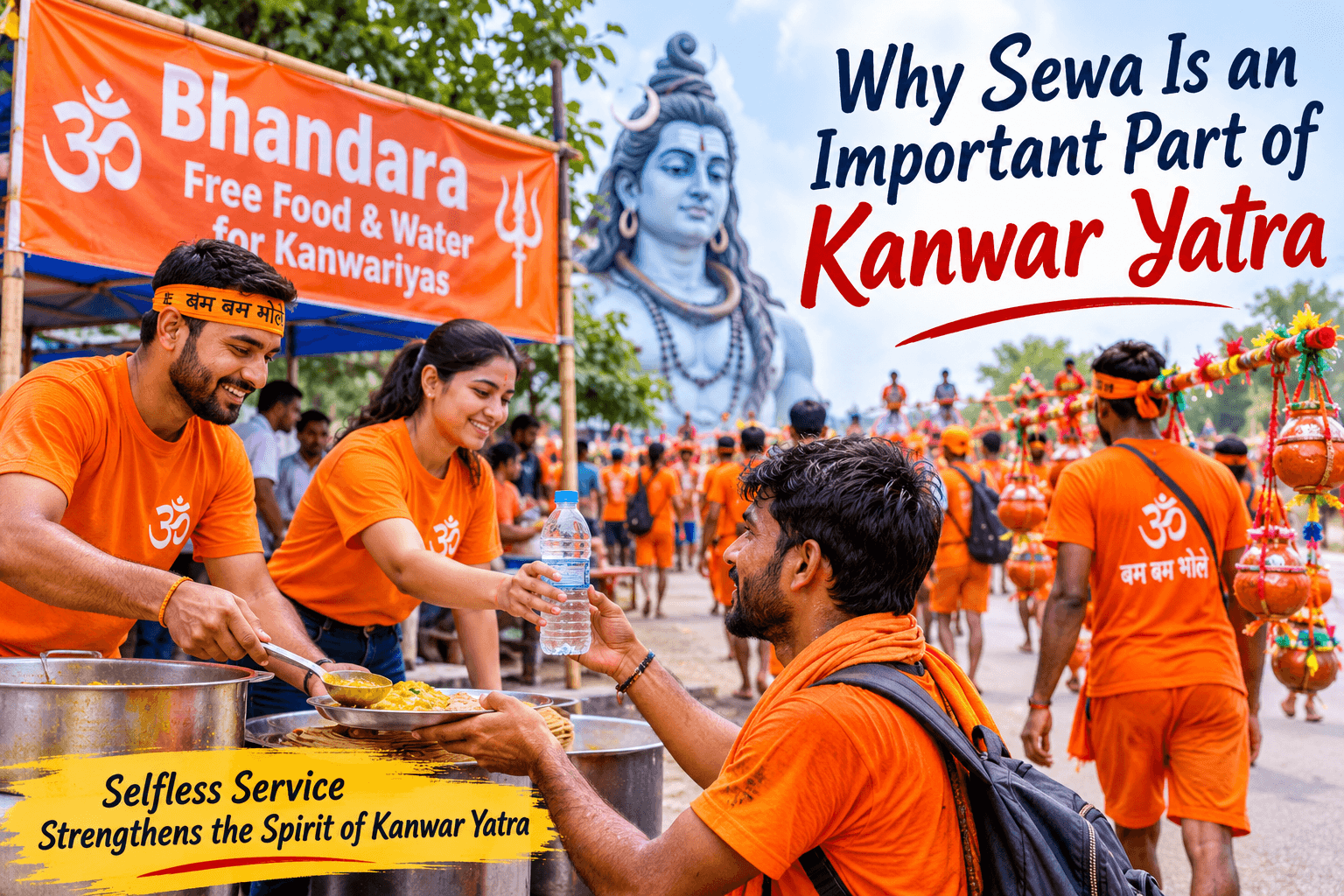
Kanwar Yatra is not only a spiritual journey but also a beautiful example of faith, devotion, unity, and selfless service. During this sacred pilgrimage, thousands of devotees travel long distances to collect holy Ganga Jal and offer it to Lord Shiva. One of the most meaningful traditions of Kanwar Yatra is Sewa (selfless service).
Sewa plays an important role in bringing people together and helping Kanwariyas complete their spiritual journey comfortably and safely.
1. Meaning of Sewa During Kanwar Yatra
Sewa means helping others without expecting anything in return. During Kanwar Yatra, devotees, volunteers, and local communities come forward to support pilgrims by providing food, drinking water, medical assistance, and resting facilities.
2. Helping Fellow Kanwariyas
Many Kanwariyas walk long distances and experience tiredness, dehydration, and physical discomfort. Helping fellow devotees with food, water, first aid, or a place to rest is considered a meaningful act of devotion.
3. Importance of Bhandaras
Bhandaras are an important part of Kanwar Yatra. Volunteers organize free food distribution camps where pilgrims can enjoy meals, snacks, tea, and refreshments. These arrangements provide comfort and energy to devotees throughout their journey.
4. Sewa Promotes Brotherhood and Unity
Kanwar Yatra brings together people from different cities, villages, and backgrounds. Through Sewa, people develop a strong feeling of brotherhood and togetherness. Helping one another creates a positive environment filled with love, respect, and devotion.
5. Medical and Emergency Assistance
Volunteers and social organizations arrange medical camps, first-aid facilities, and emergency support for Kanwariyas. These services help pilgrims manage health problems and continue their journey safely.
6. Sewa as a Form of Devotion to Lord Shiva
For many devotees, serving Kanwariyas is another way of worshipping Lord Shiva. They believe that helping others with a pure heart is a valuable expression of devotion. Selfless service teaches kindness, humility, patience, and compassion.
7. Contribution of Local Communities
Local residents, shopkeepers, social organizations, and volunteers actively participate in Kanwar Yatra arrangements. Their contribution makes the pilgrimage more organized and comfortable for devotees.
Conclusion
Sewa is one of the most beautiful traditions of Kanwar Yatra. It teaches us that devotion is not limited to prayers and rituals but is also reflected in helping others. Whether it is providing food, offering water, arranging medical support, or helping a tired pilgrim, every act of kindness has value.
The spirit of Sewa makes Kanwar Yatra more meaningful and reminds everyone of the importance of humanity, unity, and selfless service.
Har Har Mahadev! Bam Bam Bhole!