
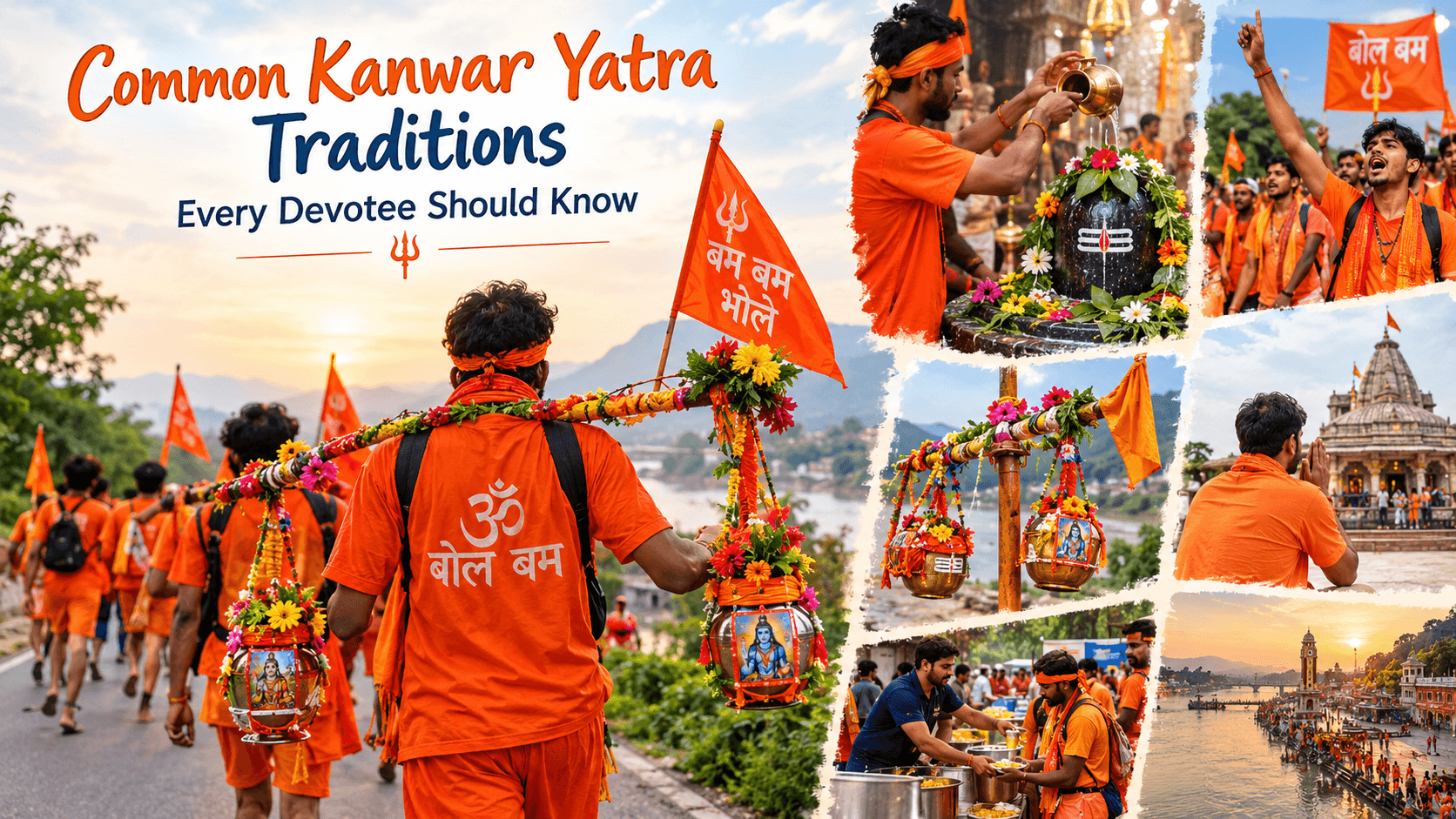
Kanwar Yatra is one of the most important Hindu pilgrimages dedicated to Lord Shiva. Every year, millions of devotees, known as Kanwariyas, participate in this sacred journey during the holy month of Sawan. They collect holy Ganga Jal and offer it to Lord Shiva as a symbol of faith, devotion, and spiritual dedication.
There are several traditions followed during Kanwar Yatra that make this pilgrimage special. These customs have been practised for generations and continue to bring devotees together through their shared love for Lord Shiva.
1. Collecting Holy Ganga Jal
One of the main traditions of Kanwar Yatra is collecting holy water from the River Ganga. Devotees often travel to sacred places such as Haridwar and Gangotri to collect Ganga Jal. They carry the water in containers attached to a decorated Kanwar and protect it throughout their journey. The holy water is later offered to Lord Shiva as an expression of devotion and faith.
2. Offering Ganga Jal to Lord Shiva
Offering Ganga Jal to a Shivling is an important ritual during Kanwar Yatra. Devotees visit Shiva temples to perform Jal Abhishek, a sacred ritual in which water is poured over the Shivling. Many pilgrims believe this offering brings spiritual peace and helps them express their gratitude and devotion to Lord Shiva.
3. Chanting Bol Bam and Bam Bam Bhole
Devotional chants such as “Bol Bam,” “Bam Bam Bhole,” and “Har Har Mahadev” are commonly heard during Kanwar Yatra. These chants express the love and faith of devotees towards Lord Shiva. They also motivate pilgrims during long walks and create a strong sense of unity among Kanwariyas.
4. Wearing Saffron-Coloured Clothes
Saffron or orange clothing is a familiar sight during Kanwar Yatra. Many devotees wear saffron T-shirts, kurtas, and scarves to express their religious devotion. The colour is widely associated with spirituality, sacrifice, and dedication. Some pilgrims also decorate their Kanwars with orange flags, flowers, and pictures of Lord Shiva.
5. Carrying the Kanwar with Care
The Kanwar is an essential part of the pilgrimage. It is traditionally used to carry containers filled with holy Ganga Jal. Devotees often decorate their Kanwars with religious symbols, colourful ribbons, and flags. Carrying the Kanwar throughout the journey represents faith, patience, discipline, and commitment to Lord Shiva.
6. Observing Fasting and a Simple Diet
Many Kanwariyas observe fasting or follow a simple vegetarian diet during the pilgrimage. Some devotees avoid certain foods and follow specific religious practices according to their beliefs. These habits help them focus on prayer and spiritual discipline throughout their journey.
7. Maintaining Cleanliness and Discipline
Cleanliness and discipline are important aspects of Kanwar Yatra. Devotees try to keep their belongings and Kanwars clean while respecting the sacred water they carry. Pilgrims should also avoid littering, follow traffic rules, and maintain cleanliness at temples, camps, and resting places.
8. Helping Fellow Devotees
Selfless service, known as Seva, is another meaningful tradition associated with Kanwar Yatra. Many volunteers and local communities arrange food, drinking water, medical facilities, and resting places for pilgrims. Devotees also help one another during difficult parts of the journey, showing kindness, unity, and compassion.
9. Visiting Shiva Temples
Visiting Shiva temples is an important part of the Kanwar Yatra experience. Many devotees complete their journey by offering Ganga Jal at a Shivling. Some visit famous pilgrimage sites, while others worship at local temples. These visits provide an opportunity to pray, express gratitude, and seek the blessings of Lord Shiva.
10. Following Religious Customs with Respect
Kanwar Yatra traditions may differ depending on the region and the beliefs of individual devotees. Some pilgrims follow specific rules for carrying the Kanwar, handling Ganga Jal, and performing temple rituals. Respecting these customs and behaving responsibly helps maintain the spiritual atmosphere of the pilgrimage.
Conclusion
Kanwar Yatra is much more than a religious journey. It is a celebration of faith, devotion, discipline, and unity. Traditions such as collecting Ganga Jal, chanting Bol Bam, wearing saffron clothes, performing Jal Abhishek, and helping fellow pilgrims make the journey meaningful for millions of devotees.
By understanding and respecting these traditions, every devotee can appreciate the spiritual importance of Kanwar Yatra and contribute to preserving this cherished pilgrimage for future generations.