
Introduction
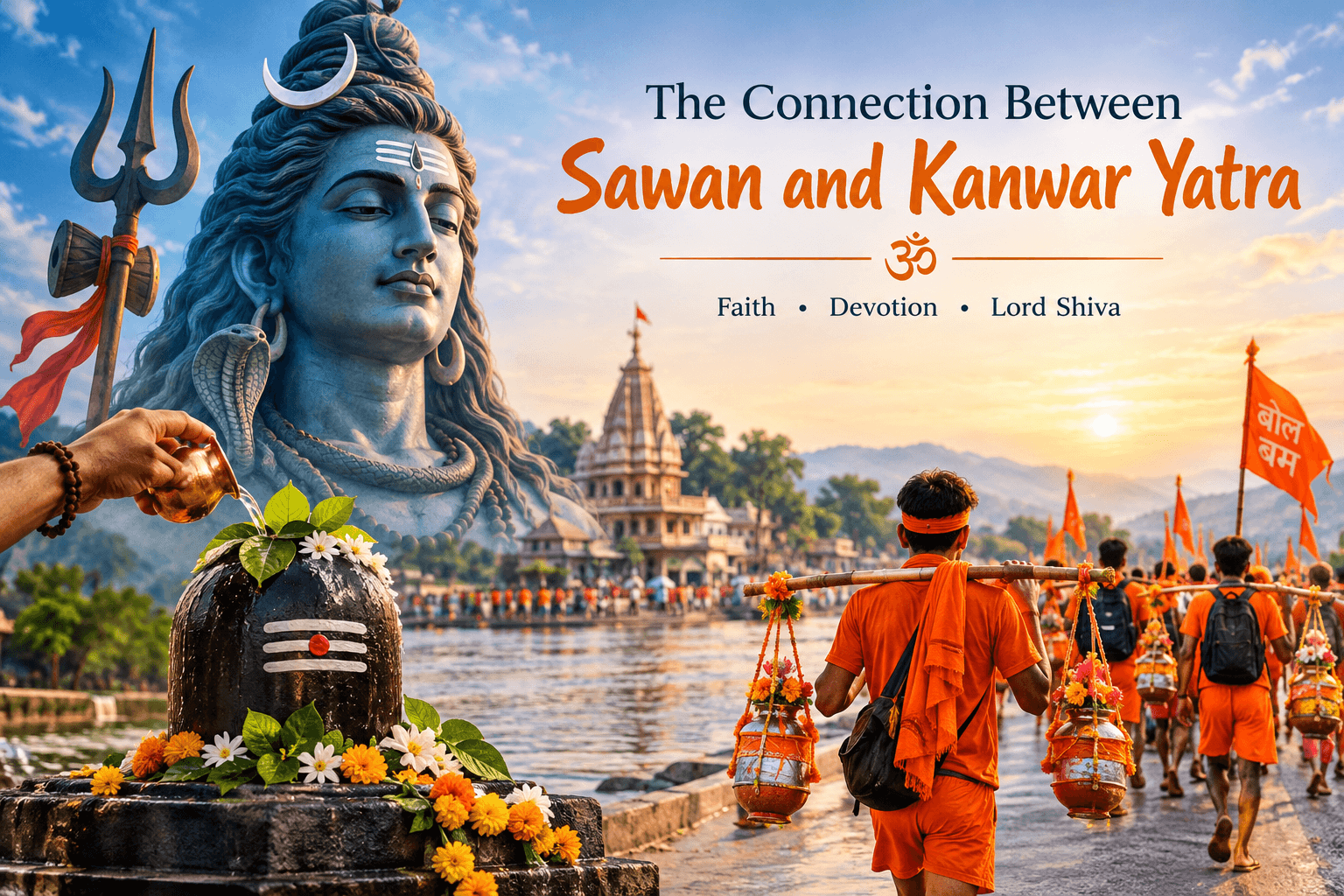
Sawan, also known as Shravan, is one of the most sacred months in Hinduism. It is dedicated to Lord Shiva, who is worshipped by millions of devotees across India. During this holy month, devotees observe fasts, visit Shiva temples, offer prayers, and participate in the famous Kanwar Yatra. The connection between Sawan and Kanwar Yatra reflects deep faith, devotion, and the spiritual traditions associated with Lord Shiva.
Why Is Sawan Special for Lord Shiva?
According to Hindu beliefs, the month of Sawan is especially auspicious for worshipping Lord Shiva. Devotees believe that offering prayers to Mahadev during this period brings peace, prosperity, happiness, and spiritual blessings.
Throughout Sawan, temples dedicated to Lord Shiva welcome large numbers of devotees. People offer water, milk, bel leaves, flowers, and other sacred items to the Shiva Lingam. Mondays, known as Sawan Somwar, hold special significance, and many devotees observe fasts to seek the blessings of Mahadev.
What Is the Kanwar Yatra?
The Kanwar Yatra is an important religious pilgrimage undertaken by Shiva devotees, popularly known as Kanwariyas. During this journey, devotees travel to sacred rivers, collect holy Ganga Jal, and carry it in a Kanwar, a traditional structure balanced on the shoulders.
Many Kanwariyas visit places such as Haridwar, Gaumukh, and other sacred destinations to collect Ganga water. They then carry the water back to their local Shiva temples, where it is offered to Lord Shiva.
The journey often involves walking long distances, maintaining discipline, chanting devotional slogans, and helping fellow pilgrims. For devotees, the Kanwar Yatra is an expression of dedication, faith, and devotion to Mahadev.
How Are Sawan and Kanwar Yatra Connected?
Sawan and Kanwar Yatra are closely connected because the holy month provides the spiritual setting for this important pilgrimage. The tradition combines the worship of Lord Shiva with the sacred offering of Ganga Jal.
Here are some key aspects of their connection:
- Devotion to Lord Shiva: Both Sawan worship and Kanwar Yatra are dedicated to Mahadev.
- Offering of Ganga Jal: Kanwariyas collect holy water and offer it to Lord Shiva as an act of devotion.
- Spiritual discipline: Many pilgrims undertake long journeys with dedication, patience, and self-control.
- Religious traditions: The pilgrimage brings communities together through shared beliefs, prayers, and rituals.
- Sacred timing: Kanwar Yatra is particularly popular during Sawan, when Shiva worship holds special importance.
The Spiritual Significance of Carrying Ganga Jal
Ganga Jal is considered sacred in Hindu traditions and is widely used in religious rituals. Offering Ganga water to Lord Shiva symbolizes purity, devotion, and spiritual surrender.
For Kanwariyas, collecting and carrying this holy water is more than a religious activity. It represents a personal commitment to Mahadev. Many devotees complete the pilgrimage on foot, following religious practices and maintaining the sanctity of the water until they reach their destination.
The ritual of offering Ganga Jal during Sawan strengthens the spiritual connection between the devotee, the sacred river, and Lord Shiva.
The Importance of Faith and Unity During Kanwar Yatra
Kanwar Yatra is not only a pilgrimage but also a celebration of faith and community spirit. During Sawan, thousands of devotees travel together, chant “Har Har Mahadev” and “Bol Bam,” and support one another along the route.
Many communities and volunteers arrange food, drinking water, medical assistance, and resting places for pilgrims. These activities demonstrate kindness, cooperation, and service, which are important values associated with religious devotion.
Saffron clothing, devotional flags, and Kanwar decorations have also become recognizable symbols of this pilgrimage.
How Devotees Prepare for Kanwar Yatra During Sawan
Preparation is an important part of a safe and meaningful Kanwar Yatra. Devotees should consider the following tips:
- Choose comfortable clothing: Wear breathable clothes and suitable footwear for long walks.
- Stay hydrated: Drink sufficient water and take regular breaks, especially during hot weather.
- Carry essential items: Keep identification, necessary medicines, and emergency contact details with you.
- Follow traffic and safety rules: Use designated pedestrian routes and follow instructions from local authorities.
- Maintain cleanliness: Avoid littering and help keep pilgrimage routes and resting areas clean.
- Respect religious traditions: Follow local temple customs and handle the Kanwar and sacred water with care.
These simple practices can help devotees focus on their spiritual journey while protecting their health and safety.
Conclusion
The connection between Sawan and Kanwar Yatra represents the deep devotion of millions of people toward Lord Shiva. Sawan inspires devotees to worship Mahadev, while Kanwar Yatra gives them an opportunity to express their faith by carrying and offering sacred Ganga Jal.
Together, these traditions promote spiritual discipline, unity, compassion, and dedication. For Kanwariyas, every step of the pilgrimage is an expression of their devotion and their desire to seek the blessings of Lord Shiva.
Har Har Mahadev! Bol Bam!