
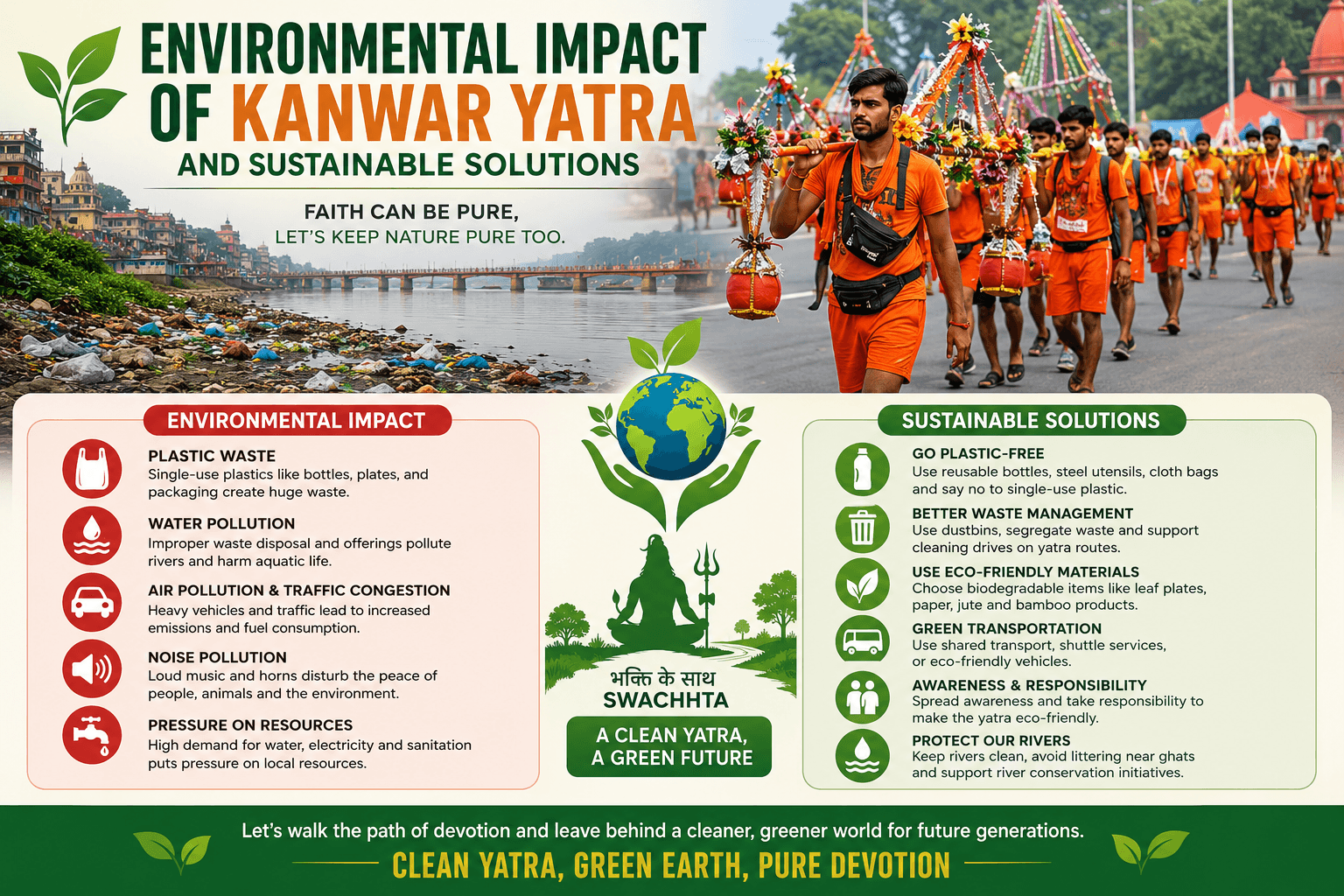
The Kanwar Yatra is one of India’s largest annual religious pilgrimages, where millions of devotees, known as Kanwariyas, travel to sacred rivers like the Ganga to collect holy water and offer it to Lord Shiva during the holy month of Shravan. This sacred journey reflects deep faith, devotion, and spiritual discipline. However, with the growing number of participants each year, the pilgrimage also creates significant environmental challenges that need urgent attention.
Environmental Impact of Kanwar Yatra
1. Plastic Waste Generation
One of the biggest environmental concerns during Kanwar Yatra is the massive use of single-use plastics such as water bottles, disposable plates, cups, and packaging materials. These items often end up littering roadsides, camps, and riverbanks, contributing to pollution.
Plastic waste takes hundreds of years to decompose and can harm animals, soil, and water bodies.
2. Water Pollution
Since the yatra revolves around collecting holy river water, maintaining water purity is crucial. Unfortunately, improper waste disposal, food leftovers, and plastic near riverbanks can pollute sacred rivers like the Ganges River.
This pollution affects aquatic life and reduces water quality for nearby communities.
3. Traffic Congestion and Air Pollution
Millions of pilgrims traveling by foot, motorcycles, cars, and support vehicles create heavy traffic congestion on highways and city roads. This leads to increased fuel consumption and higher emissions of harmful gases such as carbon dioxide.
Air pollution worsens, especially in urban areas along Kanwar routes.
4. Noise Pollution
Loud music systems, DJ trucks, horns, and large gatherings can create excessive noise pollution during the pilgrimage. High noise levels disturb local residents, wildlife, and even other pilgrims seeking a peaceful spiritual experience.
5. Pressure on Local Resources
Temporary camps and food distribution centers require large amounts of water, electricity, and sanitation facilities. In overcrowded areas, this creates pressure on local infrastructure and can lead to hygiene issues.
Sustainable Solutions for Eco-Friendly Kanwar Yatra
1. Promote Plastic-Free Pilgrimage
Authorities and organizers can encourage devotees to carry:
- Reusable water bottles
- Steel or bamboo utensils
- Cloth bags
Banning single-use plastic near pilgrimage routes can greatly reduce waste.
2. Better Waste Management
Installing:
- Dustbins at regular intervals
- Waste segregation units
- Mobile cleaning teams
can ensure cleaner roads and camps.
Volunteers can also help spread cleanliness awareness.
3. Use Eco-Friendly Materials
Decorations, tents, and food packaging should use biodegradable materials such as:
- Paper
- Leaf plates
- Jute products
- Bamboo products
These materials decompose naturally and reduce pollution.
4. Green Transportation
Encouraging:
- Shared transport
- Electric vehicles
- Shuttle buses
can reduce traffic congestion and carbon emissions.
Dedicated routes for pilgrims can also improve traffic management.
5. Awareness Campaigns
Environmental awareness is essential. Religious leaders, NGOs, and local administrations can educate pilgrims about protecting nature while practicing devotion.
Simple messages such as “Bhakti ke saath Swachhta” can create a big impact.
6. River Protection Initiatives
Special cleaning drives before and after the yatra can help protect sacred rivers. Authorities should monitor waste disposal near ghats and install proper sanitation facilities.
Conclusion
Kanwar Yatra is a beautiful symbol of faith and devotion, but preserving the environment is equally important. By adopting sustainable practices, devotees can ensure that this sacred pilgrimage remains spiritually meaningful while also protecting nature for future generations.
True devotion lies not only in worship but also in caring for the Earth that sustains us.