
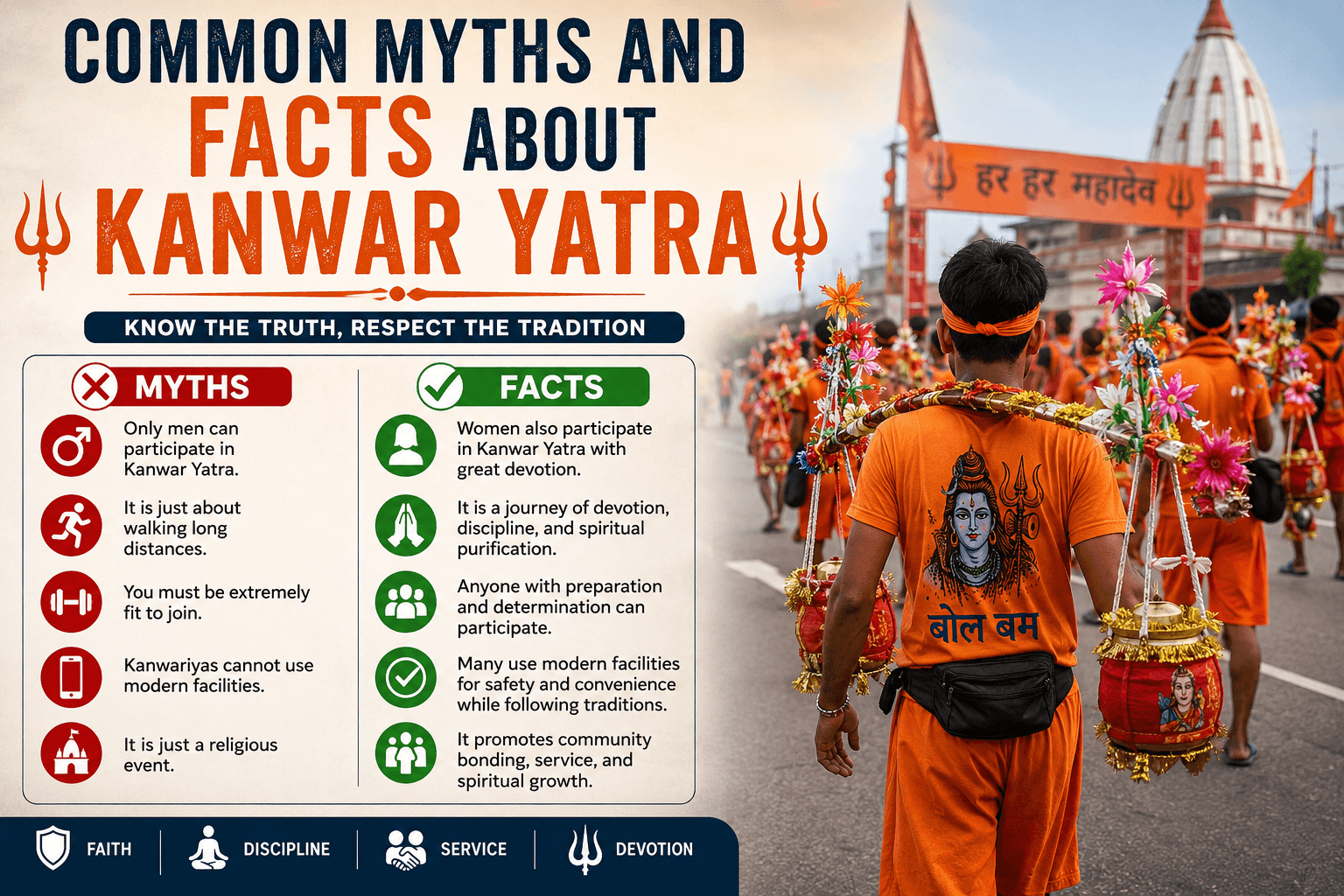
Every year, millions of devotees participate in the sacred Kanwar Yatra, one of the most significant pilgrimages dedicated to Lord Shiva. During this spiritual journey, devotees known as Kanwariyas carry holy water from sacred rivers and offer it to Shiva temples. Despite its popularity, many misconceptions surround this sacred tradition.
In this blog, we will uncover the most common myths about Kanwar Yatra and reveal the real facts behind them.
What is Kanwar Yatra?
Kanwar Yatra is an annual pilgrimage where devotees collect holy water, usually from the Ganga River, and carry it over long distances to offer at Shiva temples during the holy month of Shravan. This pilgrimage symbolizes devotion, discipline, faith, and spiritual purification.
Myth 1: Only Men Can Participate in Kanwar Yatra
Fact:
This is one of the biggest myths. Women also actively participate in Kanwar Yatra. In recent years, the number of female devotees joining the pilgrimage has increased significantly. Devotion has no gender boundaries.
Myth 2: Kanwar Yatra is Only About Walking Long Distances
Fact:
Walking is only one aspect of the journey. The true importance of Kanwar Yatra lies in spiritual discipline, prayer, fasting, and devotion to Lord Shiva. The pilgrimage is more about inner purification than physical endurance.
Myth 3: You Must Be Extremely Fit to Join
Fact:
While physical stamina helps, anyone with proper preparation can participate. Many devotees choose shorter routes according to their comfort and capability. Proper hydration, rest, and balanced food make the journey manageable.
Myth 4: Kanwariyas Cannot Use Any Modern Facilities
Fact:
Many people believe using vehicles, mobile phones, or support camps is against tradition. In reality, while some devotees prefer strict traditional methods, many use modern facilities for safety and convenience.
Myth 5: Kanwar Yatra is Just a Religious Event
Fact:
Kanwar Yatra is much more than a ritual. It promotes:
- Community bonding
- Self-discipline
- Charity and service
- Spiritual growth
The journey often brings people together beyond social and economic differences.
Myth 6: Only Young People Participate
Fact:
People of all age groups join Kanwar Yatra—young adults, middle-aged devotees, and even senior citizens. Faith and devotion matter more than age.
Myth 7: All Kanwars Are the Same
Fact:
There are different types of Kanwars, such as:
- Simple Kanwar – Traditional bamboo structure
- Dak Kanwar – Fast-paced journey with minimal stops
- Jhula Kanwar – Decorated and suspended style
Each style reflects different traditions and devotional practices.
Final Thoughts
Understanding the myths and facts about Kanwar Yatra helps us appreciate the deeper meaning of this sacred pilgrimage. More than a physical journey, Kanwar Yatra represents devotion, discipline, and surrender to Lord Shiva.
Whether you are participating in Kanwar Yatra 2026 or simply learning about this spiritual tradition, knowing the truth behind common myths allows you to respect and understand its real significance.