
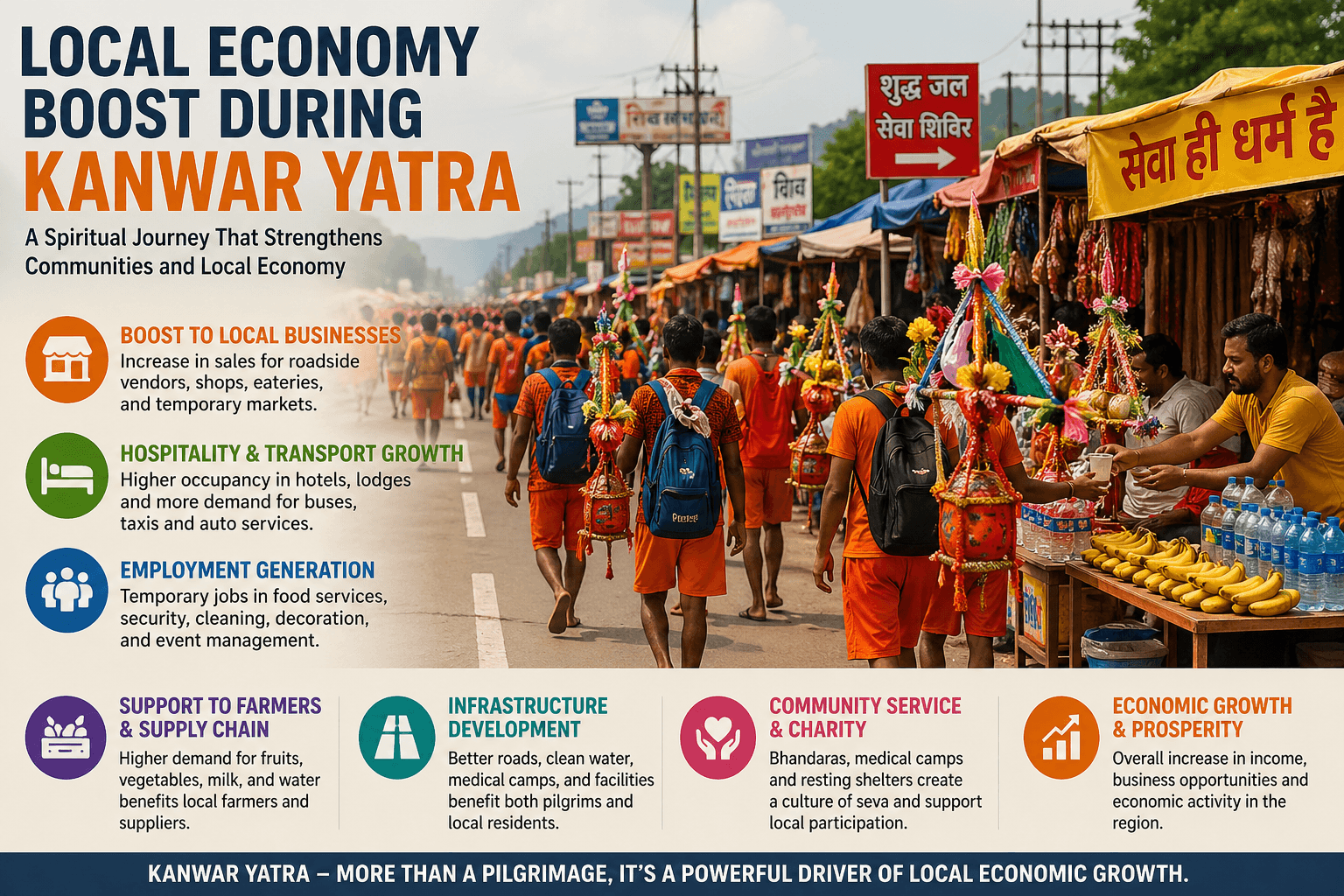
Every year during the holy month of Shravan, millions of devotees participate in the sacred Kanwar Yatra, creating not just a spiritual wave but also a significant economic impact across North India. While the yatra is primarily religious, its contribution to the local economy is massive and often overlooked.
Rise in Small Business Opportunities
During the Kanwar Yatra, roadside areas, highways, and towns witness a sudden increase in temporary markets. Local vendors set up stalls selling:
- Food items (fruits, snacks, beverages)
- Religious items (kanwars, rudraksha, पूजा सामग्री)
- Clothes and essentials
For many small vendors, this period becomes one of the most profitable times of the year. Even daily wage earners find temporary work, improving their income.
Boost to Hospitality and Transport Sector
Hotels, dharamshalas, and lodges experience high occupancy as pilgrims travel long distances. Transport services such as:
- Auto-rickshaws
- Buses
- Private taxis
see increased demand. Fuel stations and repair shops also benefit due to continuous movement on highways.
Cities like Haridwar, Meerut, and Delhi become major hubs where economic activity spikes significantly.
Employment Generation
The yatra creates short-term employment opportunities in areas such as:
- Food service and catering
- Tent and decoration services
- Security and crowd management
- Cleaning and sanitation
Local youth often take up these jobs, which helps in reducing temporary unemployment.
Growth of Local Agriculture and Supply Chains
Farmers and local suppliers benefit as the demand for fresh fruits, milk, vegetables, and water increases sharply. This strengthens local supply chains and ensures that produce is sold quickly at good prices.
Religious Tourism and Infrastructure Development
The government invests heavily in infrastructure during this period, including:
- Road maintenance
- Clean water supply
- Medical camps
- Security arrangements
These developments not only support the yatra but also leave long-term benefits for local residents and boost future tourism.
Community Participation and Charity
Local communities actively participate by organizing:
- Free food camps (Bhandaras)
- Medical aid camps
- Resting shelters
This culture of सेवा (service) strengthens social bonds and encourages donations, indirectly supporting local businesses that supply these services.
Challenges to Balance Growth
While the economic boost is significant, it also brings challenges such as:
- Traffic congestion
- Waste management issues
- Price inflation in some areas
Proper planning and management are essential to ensure sustainable growth.
Conclusion
The Kanwar Yatra is not just a spiritual journey but also a powerful driver of local economic growth. From small vendors to large businesses, many sectors benefit from this annual pilgrimage. With better planning and sustainable practices, its economic impact can be enhanced even further, making it beneficial for both devotees and local communities.