
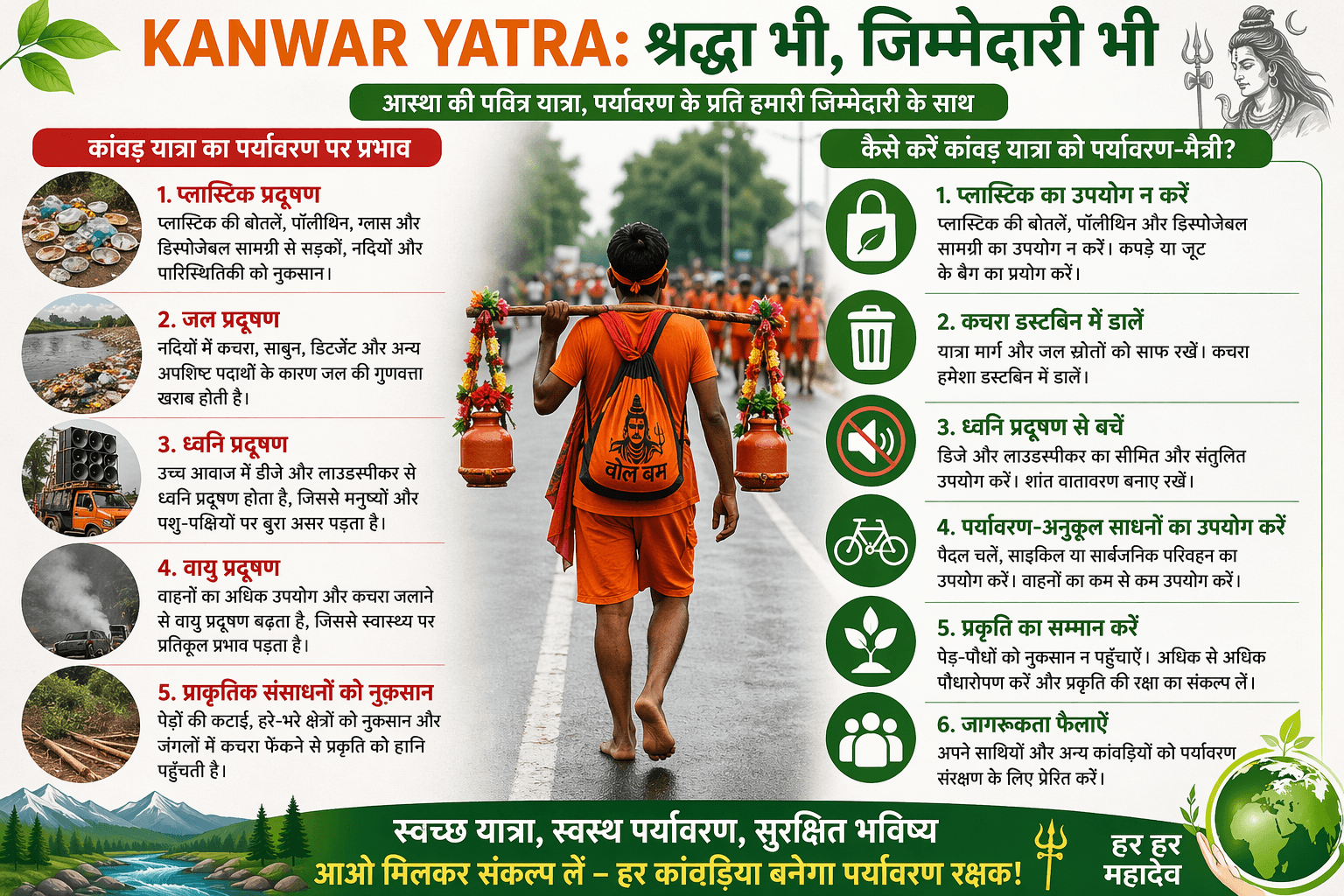
The Kanwar Yatra is one of the largest religious pilgrimages in India, where millions of devotees (Kanwariyas) travel to collect holy water from the Ganga River and offer it to Lord Shiva. While the yatra is deeply spiritual and culturally significant, its large scale also creates notable environmental challenges.
In recent years, concerns about pollution, waste management, and ecological damage during the Kanwar Yatra have increased. Understanding these impacts and adopting eco-friendly practices is essential to keep this sacred journey sustainable for the future.
Environmental Impact of Kanwar Yatra
1. Plastic Pollution
One of the biggest issues during the Kanwar Yatra is the massive use of single-use plastic such as bottles, food packaging, and decorations. Many of these items are left behind on roads and near water bodies, causing long-term environmental damage.
2. Water Pollution
Devotees often collect and offer water from rivers like the Ganga. However, improper disposal of waste materials into rivers leads to contamination, affecting aquatic life and water quality.
3. Air and Noise Pollution
Increased vehicle movement, diesel generators, and loud DJ systems contribute to air and noise pollution. This affects both the environment and local communities.
4. Waste Accumulation
Large gatherings along routes generate huge amounts of garbage. Improper waste management can lead to unhygienic conditions and health risks.
How to Stay Eco-Friendly During Kanwar Yatra
1. Avoid Single-Use Plastic
Use reusable water bottles, steel containers, and eco-friendly packaging instead of plastic items.
2. Keep the Route Clean
Do not litter roads or riverbanks. Always dispose of waste in designated dustbins or carry a garbage bag with you.
3. Use Biodegradable Offerings
Use natural items like flowers, leaves, and clay lamps for rituals instead of synthetic materials.
4. Respect Water Bodies
Avoid throwing any waste into rivers or ponds. Help preserve the purity of holy rivers like the Ganga.
5. Reduce Noise Pollution
Limit the use of loudspeakers and DJs, especially in residential and sensitive areas.
6. Prefer Walking and Shared Transport
Whenever possible, walk or use shared transport to reduce fuel consumption and emissions.
Role of Authorities and Volunteers
Government bodies, NGOs, and volunteers play a key role in managing cleanliness, spreading awareness, and ensuring proper waste disposal during the Kanwar Yatra. Their efforts help reduce environmental damage and promote sustainable pilgrimage practices.
Conclusion
The Kanwar Yatra is not just a spiritual journey but also a shared responsibility. By adopting eco-friendly habits, devotees can help protect the environment while continuing their devotion to Lord Shiva. A clean and green Kanwar Yatra ensures that this sacred tradition remains sustainable for generations to come.